The Chinese Knot Making a Modern Menswear Comeback
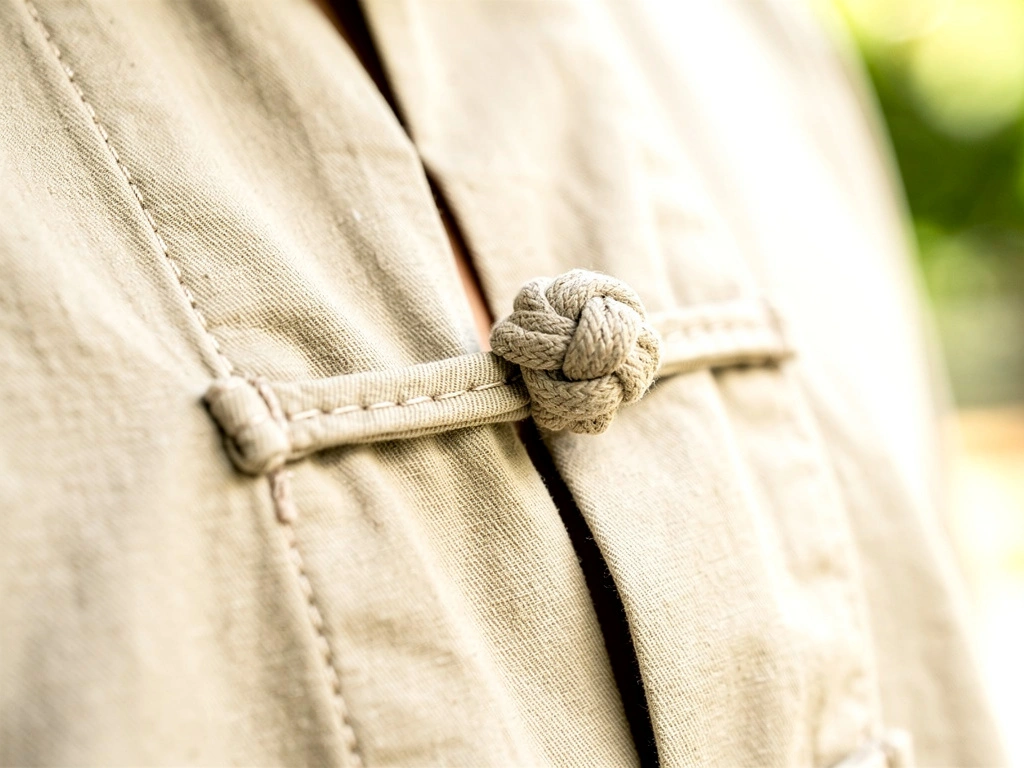
There’s a particular kind of detail that does more than close a garment. It holds a conversation. The pankou, the traditional Chinese knotted fastening most people now call simply the Chinese knot, is one of those details. It’s compact, deliberate and shaped by hand. At first glance it reads as decorative. Look closer and you start to understand it’s doing something more considered than that.
Restrained knots for understated occasions.
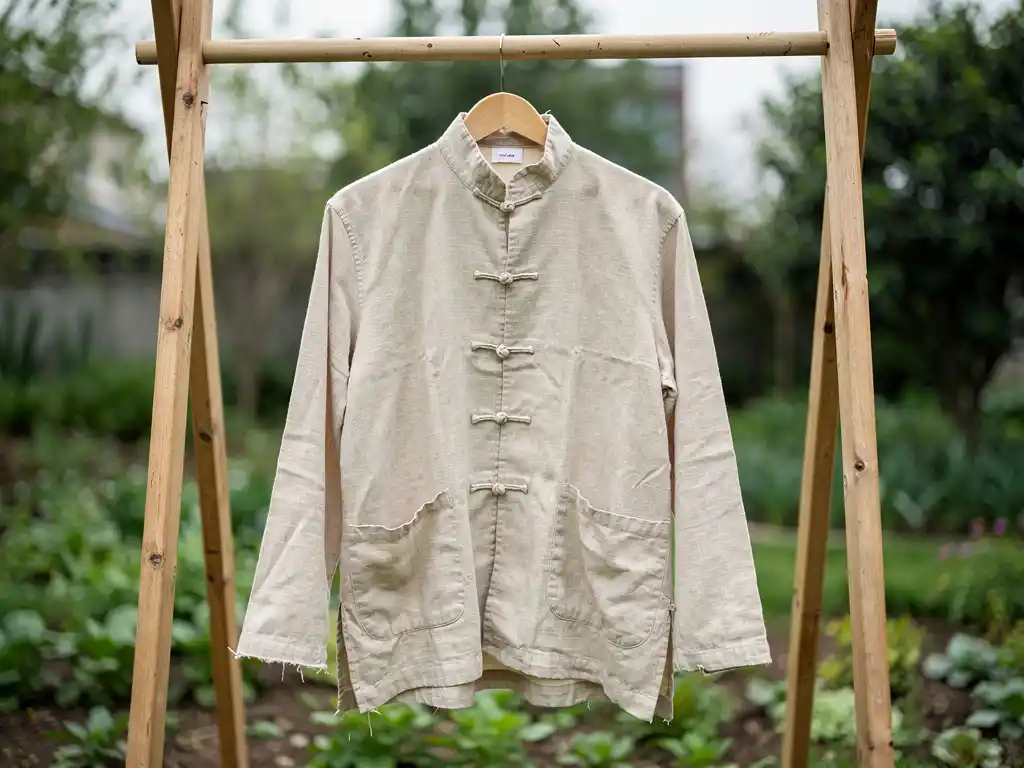
Before it became a talking point in contemporary menswear, the pankou was doing entirely practical work. From the Tang jacket to the Changshan and ceremonial dress across multiple dynasties, these garments were held together not by metal hardware or machine-pressed buttons, but by fabric shaped into itself. Loop meets knot, a closure free from industry.
From Function to Symbol
What’s interesting is how quickly function became form. Each knot was hand-tied, often symmetrical, occasionally intricate enough to border on ornamental. The technique gave garments a distinct structure that completely avoided the stiff, rigid feel of heavy interlinings. And because nothing in its construction was accidental, craft moved naturally into meaning.
In Chinese visual culture, the continuous loop came to represent unity and connection. No clear beginning, no clear end. The pankou sat squarely within that language. Fastening a jacket, yes. But also saying something in the process.
“The pankou found its way back in, not as the centrepiece of a full traditional look, but as a single, precise detail on an otherwise contemporary garment.”
Different styles communicated different things. Restrained knots for understated occasions. More elaborate forms for ceremony or status. The range was wide, but the intention was constant.
The 20th century, as ever, complicated things. Western tailoring conventions spread. Zips and mass production reshaped how garments were built and sold. The pankou didn’t vanish, but it retreated. Into ceremonial contexts, cultural dress, occasions where tradition held its ground. It became something to be preserved rather than actively worn, respected as heritage rather than pulled out of the wardrobe every day.
A Return Through Modern Fashion
Then fashion, as it periodically does, started reaching backwards. Not to replicate, but to pull something forward and see how it sits in a new context. Designers began treating heritage as material rather than a museum piece. And the pankou found its way back in, not as the centrepiece of a full traditional look, but as a single, precise detail on an otherwise contemporary garment.
That shift is where things get genuinely interesting. A knot closure on an overshirt. One fastening point on a structured jacket. A quiet interruption in an otherwise familiar silhouette. The surrounding piece stays modern with familiar cuts and clean lines, but that one element changes the register entirely. It adds weight without volume. Character without noise.
Why the Pankou Works Today
Streetwear adopted it fast. A sure sign of its energy. The pankou has been appearing on hoodies, fleece layers, hybrid pieces that blur the line between sportswear and structured dressing. Brands are testing placement and scale, sometimes keeping it minimal, sometimes pushing it large enough to become the point of the whole piece. Either way, the effect holds: a handcrafted detail inside an industrial context creates contrast, and contrast creates edge.
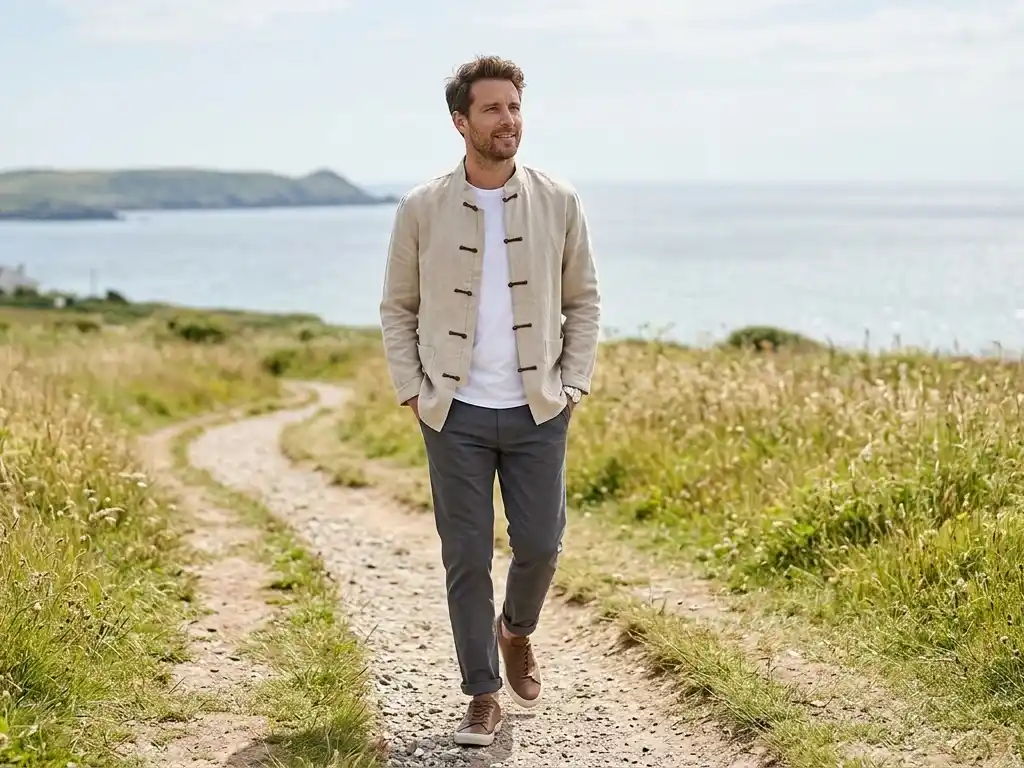
The timing of all this isn’t accidental. Menswear has been quietly stepping back from heavy logowork and obvious branding. There’s more appetite now for details that reward attention rather than demand it. Alongside that, the influence of Asian designers and creative voices on global fashion has moved from peripheral to central. Not as a passing trend but as a fundamental shift in where ideas are coming from. The pankou fits naturally within that movement, carrying context and history that purely aesthetic details simply can’t match.
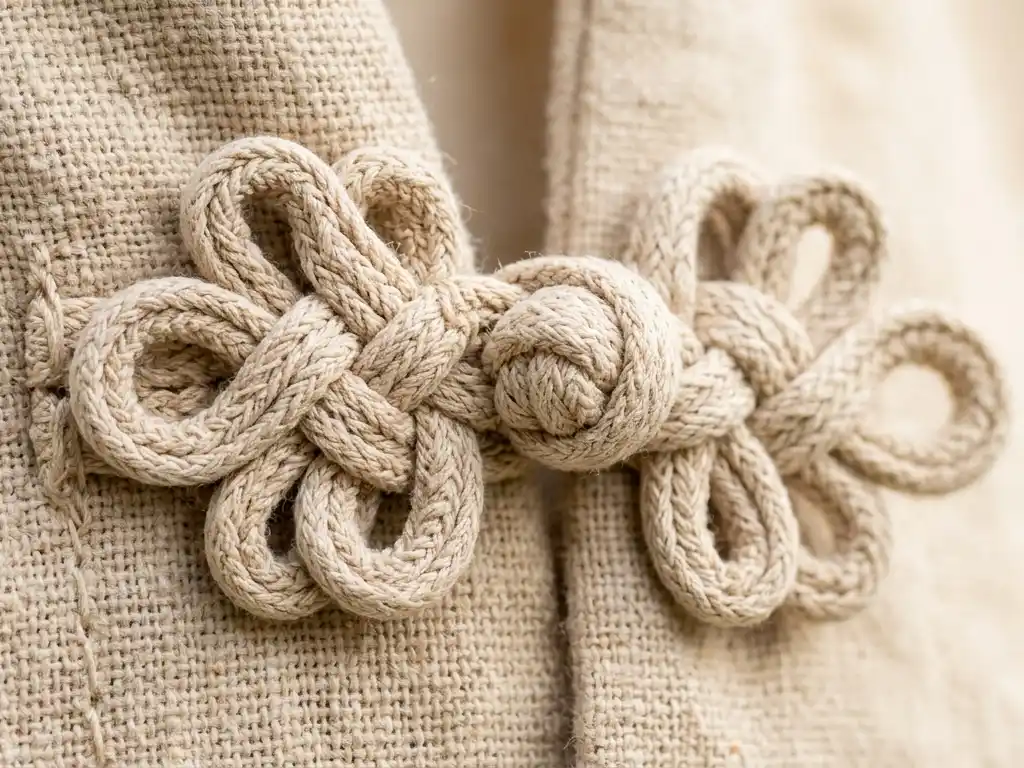
There’s also something to be said for the handmade quality at the core of it. In a wardrobe landscape still dominated by fast-produced pieces, anything that carries a sense of intention and craft reads differently. The pankou doesn’t just look considered. It’s considered, structurally and historically.
What separates it from trend-cycle noise is precisely that history. This isn’t a detail invented for the current moment. It was always there, moving through centuries of dress and meaning, waiting for a context that understood how to use it without overdoing it. The journey from a Tang dynasty garment to a contemporary overshirt isn’t reinvention. It’s reintroduction.
It has made a remarkable comeback, and frankly, it looks better than ever.
“As menswear becomes less interested in displaying status and more interested in signalling taste, the smallest details are increasingly carrying the strongest messages.”