Good Style Starts With the Right Fit
The moment a man enters a room, it’s him you notice, not his jacket. Some men command a room with barely a word and it’s never down to their clothes.
We can’t always explain why a suit works.
Often, the finest garments appear unremarkable at first, then reveal their craftsmanship on inspection. A perfectly placed shoulder seam, a collar that hugs the neck without tension and trousers that skim the shoe without breaking create that effortless look. Nothing demands attention. You just know it’s correct the moment you see it.
We all notice the colour or logo first, and we can’t always explain why a suit works, but we know when it does. You will seldom hear a man remark on how a shoulder seam aligns perfectly or a trouser break sits just so. What you pick up instead is a kind of calm neatness you can’t quite explain.
The Details You Notice Without Seeing
Poor fit stands out straight away. You see sleeves swallowing hands or a gaping jacket collar, and the whole outfit falls apart. Every little mistake jars the eye for a moment. Our brain senses something isn’t quite right, even when we can’t put our finger on it. Properly fitted clothes eliminate distractions, allowing the face, posture and personality to take centre stage.

Trends come and go every few months. A well-cut shoulder from a decade ago still holds up. A perfectly proportioned navy blazer from ten years ago can look more contemporary than a trend-led piece from last month, simply because it follows the body rather than the moment. Good tailoring makes trends feel less urgent because the shape does the work.
This explains why the best-dressed men appear effortless rather than forced. Good style comes from getting the cut and proportions right instead of relying on flash details. A crisp white shirt with a perfect collar will always outclass a garish pattern that strains at the buttons, just as a simple crewneck with aligned shoulders will outshine an expensive designer piece with drooping seams. A good fit can make the plainest pieces feel surprisingly polished. Getting fit right means paying attention to tiny details that most blokes overlook.
Where Good Fit Begins
The shoulder is the foundation, whether on a jacket or a shirt. The seam should sit at the point where the shoulder naturally ends, not halfway down the upper arm. If the shoulder is wrong, almost nothing else can be corrected. A jacket collar should rest against the shirt collar, without lifting away or digging in. It ought to sit cleanly over your chest without pulling at the button or feeling tight. You should be able to button it without the fabric pulling into an X shape.
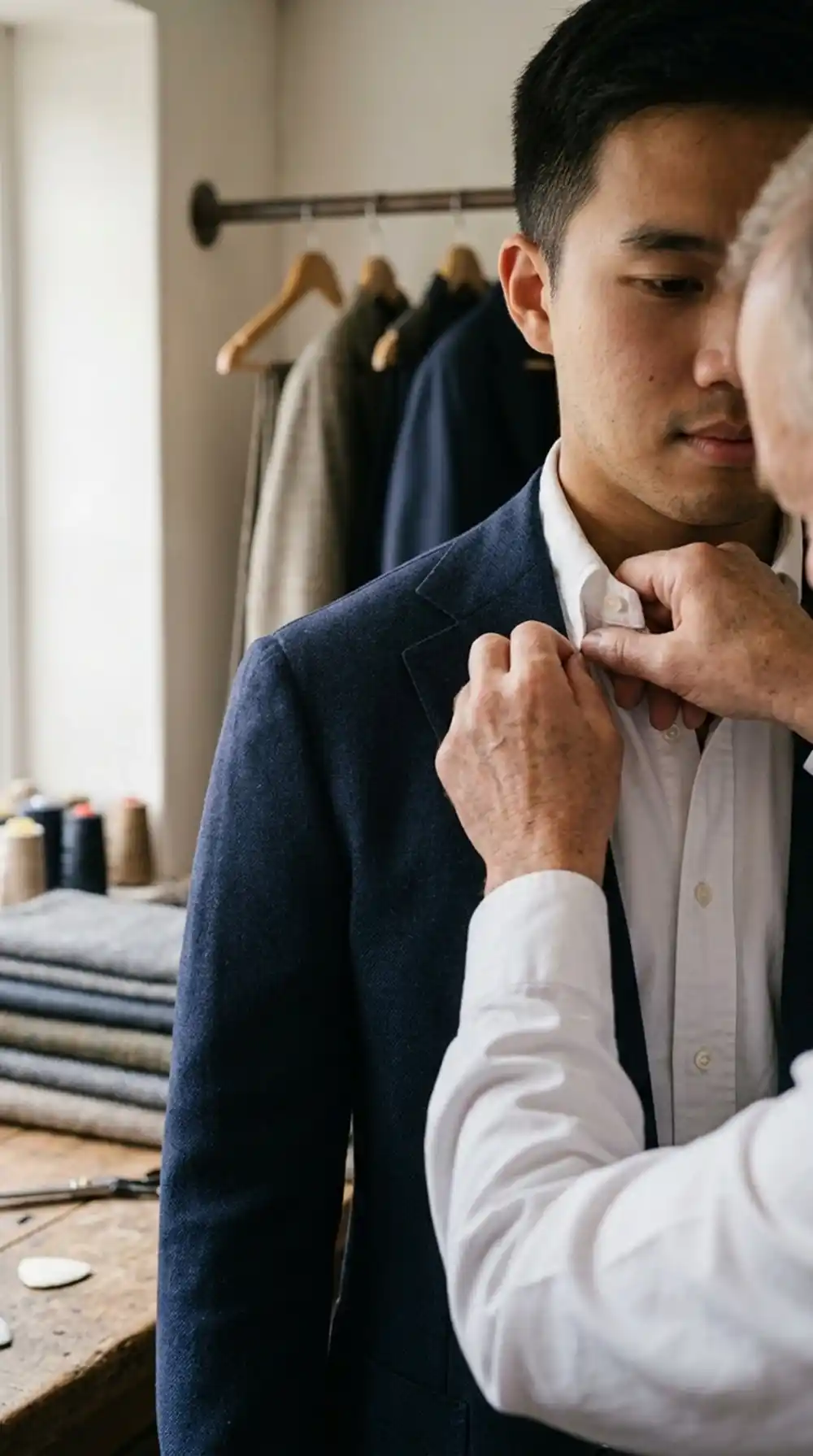
Sleeves do more work than most men give them credit for. A jacket sleeve should finish just above the wrist bone, allowing a sliver of shirt cuff to show. The shirt sleeve should end at the base of the thumb when unbuttoned, so it doesn’t disappear inside a jacket or bunch at the elbow. Trousers should sit at the waist and fall without excessive pooling around the shoe. Whether you prefer a single break, a slight break or no break at all, the fabric should not collapse in folds around the ankle. All of this is simple stuff, really just the basics that keep an outfit tidy.
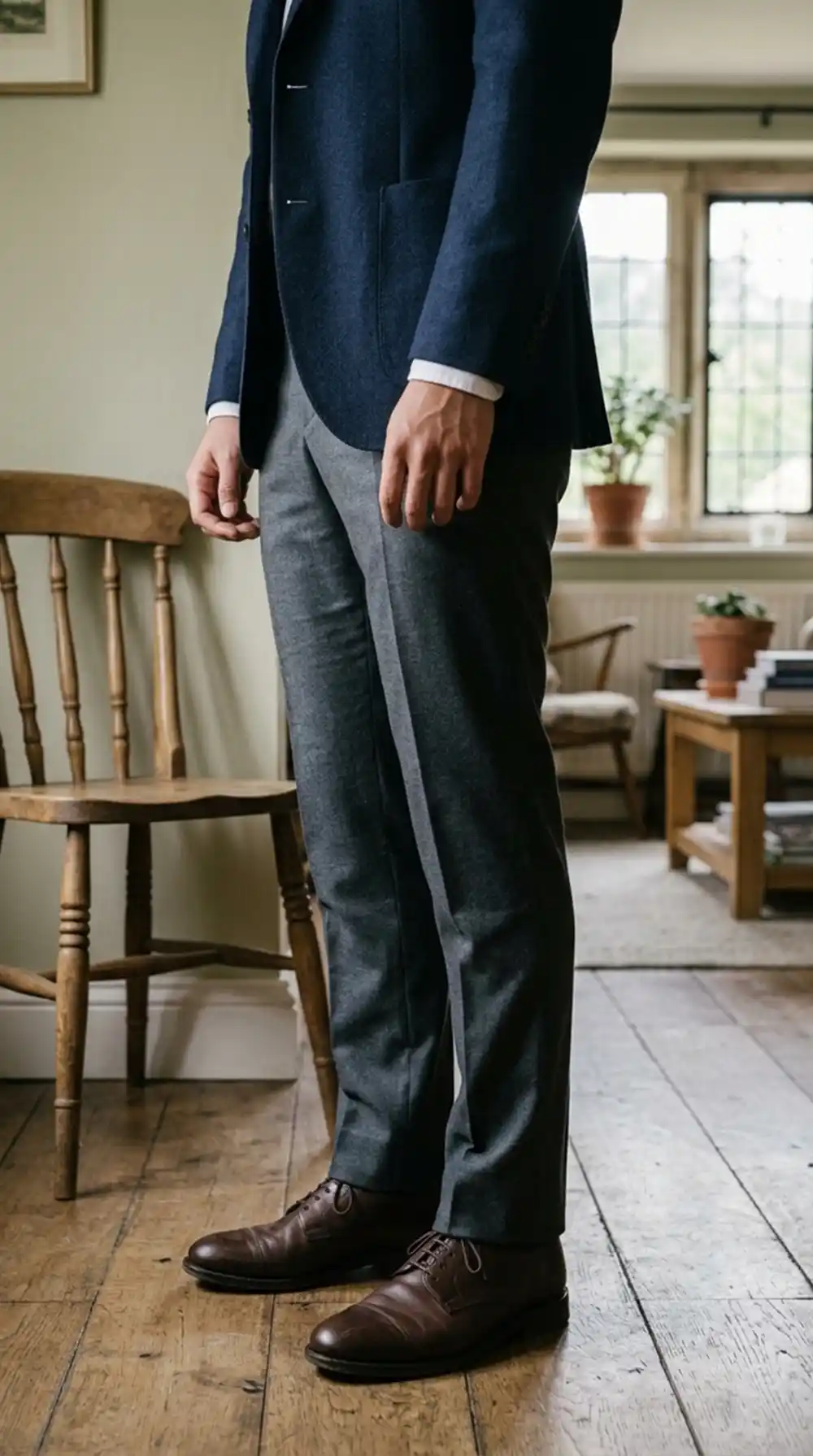
People assume you need a tailor on retainer, or the body of a catalogue model. You don’t. In reality, most well-dressed men achieve fit through one simple practice: alterations. Off-the-peg clothing is cut to a generic average and almost nobody is exactly that average. Trousers are hemmed. Jacket sleeves are shortened. Waistbands are taken in or let out. A decent tailor can take a jacket that’s nearly there and make it look like it was cut for you.

Taking things to a tailor isn’t about vanity, it’s simply how you make off-the-peg pieces actually work. A moderately priced jacket with altered sleeves and a cleaned-up waist will often look better than an expensive jacket left untouched. The same applies to shirts, chinos, even casual overshirts. Once you understand your own measurements and the small adjustments that suit your frame, every purchase becomes more deliberate.
Why Fit Makes Everything Else Work
With so many loud trends around lately, understated dressing feels like a breath of fresh air. Men are moving away from the idea that style means accumulating more patterns, more branding, more seasonal gimmicks. More men are realising they only need a handful of pieces that earn their keep. Fit is central to that philosophy.
Related Article · MenswearThe quality of a garment is shaped by its fabric, not its label. An editorial look at how texture, drape and durability define lasting menswear.→A compact collection of well-fitting essentials can carry a man through almost any setting. A dark wool overcoat, a plain Oxford shirt, a pair of tailored trousers, a good crewneck, a simple leather shoe. None of these items need to be remarkable on their own. What makes them remarkable is how they sit on the body. Whether you are ducking out in the rain or standing in a crowded pub, well-cut clothes keep you looking put together. People pick up on that confidence because it shows you care about details without desperately seeking attention.

Funny thing about good fit: nobody clocks it in the room. Nobody will stop you to compliment the exact length of your sleeve. Nobody will ask where you found a jacket whose shoulder lies so naturally. But they will remember that you looked calm, sharp and entirely at ease. They will remember that the clothes seemed to belong to you, rather than to a trend.
When clothes fit properly, they move with you instead of getting in the way. Many try too hard, but staying quiet works wonders.
“Good dressing is becoming less about being noticed for what you wear and more about being recognised as someone who understands proportion, restraint and the visual language of his surroundings.”