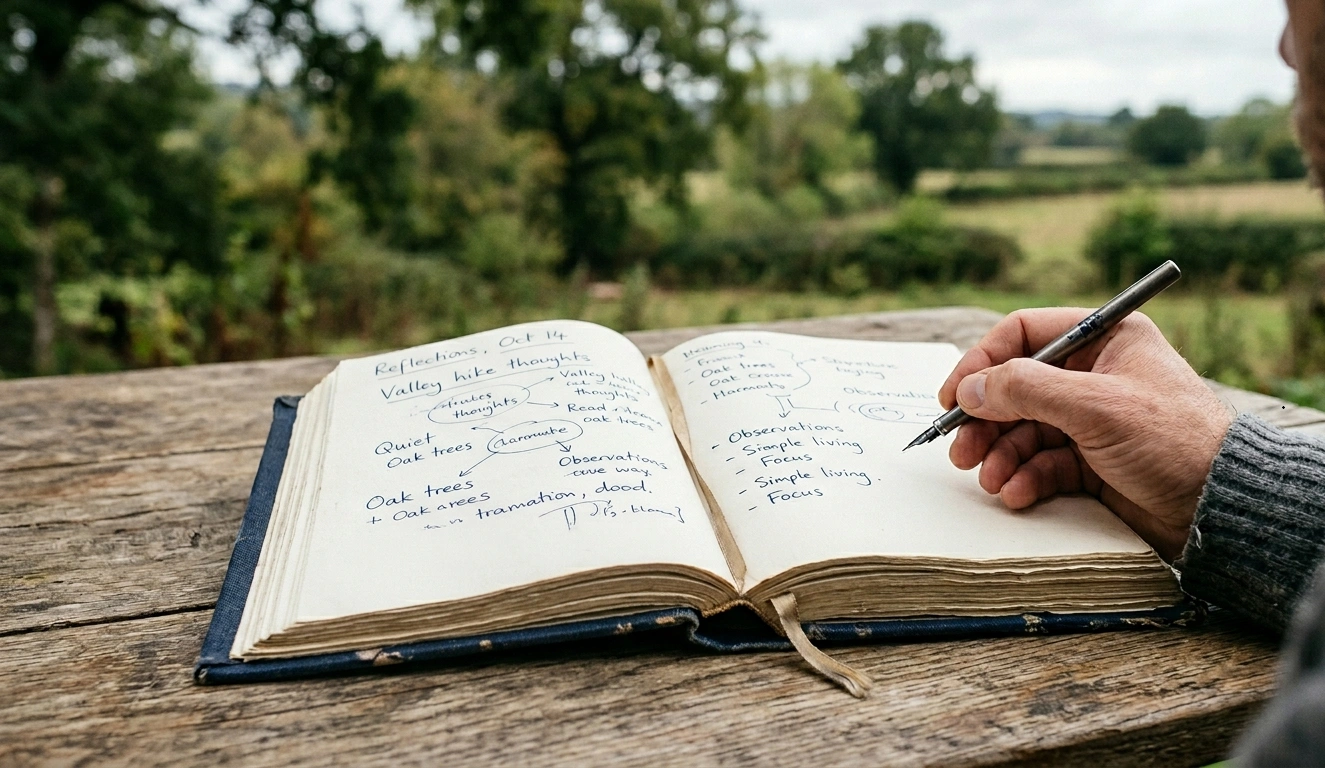
The Case for Carrying a Notebook in a Digital World
Pulling a paper notebook from a coat pocket carries a quiet, almost subversive confidence. In a room dominated by the glow of smartphones and the frantic tapping of tablets, the act of opening a bound volume stands entirely apart.
The benefits of putting pen to paper extend far beyond aesthetics.
Unlike most things we carry today, a notebook asks nothing of you. No signal, no reminder, no demands. Instead, it signals something increasingly rare in modern life: a deliberate choice to disconnect, if only for a moment, from the digital slipstream.
It isn’t about longing for the past and it certainly isn’t about turning your back on technology. It’s more of a quiet recalibration, a small, deliberate choice about how the day gets spent. Our devices were supposed to simplify life. Instead, they’ve turned our pockets into battlegrounds for attention. Every digital note on a screen must fight the gravitational pull of unread inboxes, breaking news and group chats. A blank page has no such noise. It opens, takes your thoughts and shuts. No fuss. This total absence of friction has become its greatest luxury.
The Value of Slowing Down
The benefits of putting pen to paper extend far beyond aesthetics. There is a distinct cognitive shift that occurs when the hand and mind collaborate on a physical surface. Typing pushes you along at its own pace. Putting pen to paper slows everything down and, yes, it can feel awkward at first, but that’s exactly why it works. It forces a slower, more considered pace, allowing ideas the time to properly form before they are recorded.

The wellness industry calls it ‘journalling’, a word that makes many men wince, and fair enough. It’s just a space to think without anyone watching. Personally, that tends to mean scribbled to-do lists and the odd half-baked idea that probably shouldn’t see daylight. There’s something else worth noting, too. Paper runs out. Digital storage doesn’t, so we hoard everything. No editing, no limits.
“A notebook that’s seen a few knocks is satisfying: dog-eared pages, a cracked spine, ink that bled through when you pressed too hard.”
A notebook only has so much room, which means you must choose what truly belongs there. You must actively decide what deserves to occupy the space. Whether you adopt a structured system like Ryder Carroll’s Bullet Journal method or simply maintain a running, unstructured list of tasks and observations, the result is the same: an analogue organisation system that works for you, rather than an app that demands your engagement.
What is a bullet journal?
Created by designer Ryder Carroll, the Bullet Journal is a notebook-based system for organising tasks, appointments, notes and ideas in one place.
Using simple symbols and short entries, it combines planning, note-taking and journalling within a single notebook. The format is intentionally flexible, allowing users to create a system that suits their own routines rather than following a fixed template.
Its popularity stems from a straightforward idea: putting pen to paper helps bring greater clarity to what deserves your attention.
A Tool With Character
If you love the feel of fine menswear, you’ll instinctively understand the appeal of a premium notebook. The objects we carry should possess character and a notebook is no exception. The market has evolved far beyond standard stationery, with discerning men gravitating towards Japanese-engineered paper, hand-stitched bindings and covers wrapped in waxed canvas or heavy leather.

A notebook that’s seen a few knocks is satisfying: dog-eared pages, a cracked spine, ink that bled through when you pressed too hard. It looks used because it was. Pair it with a properly weighted rollerball or a classic fountain pen, and writing stops being a chore and starts feeling like a ritual. It slots seamlessly alongside other analogue preferences. The mechanical watch, the record player gathering dust half the week. You know what they have in common? None of them need updating. They speak to a quiet urge many of us feel now, to have at least a few parts of life that aren’t filtered through a screen.
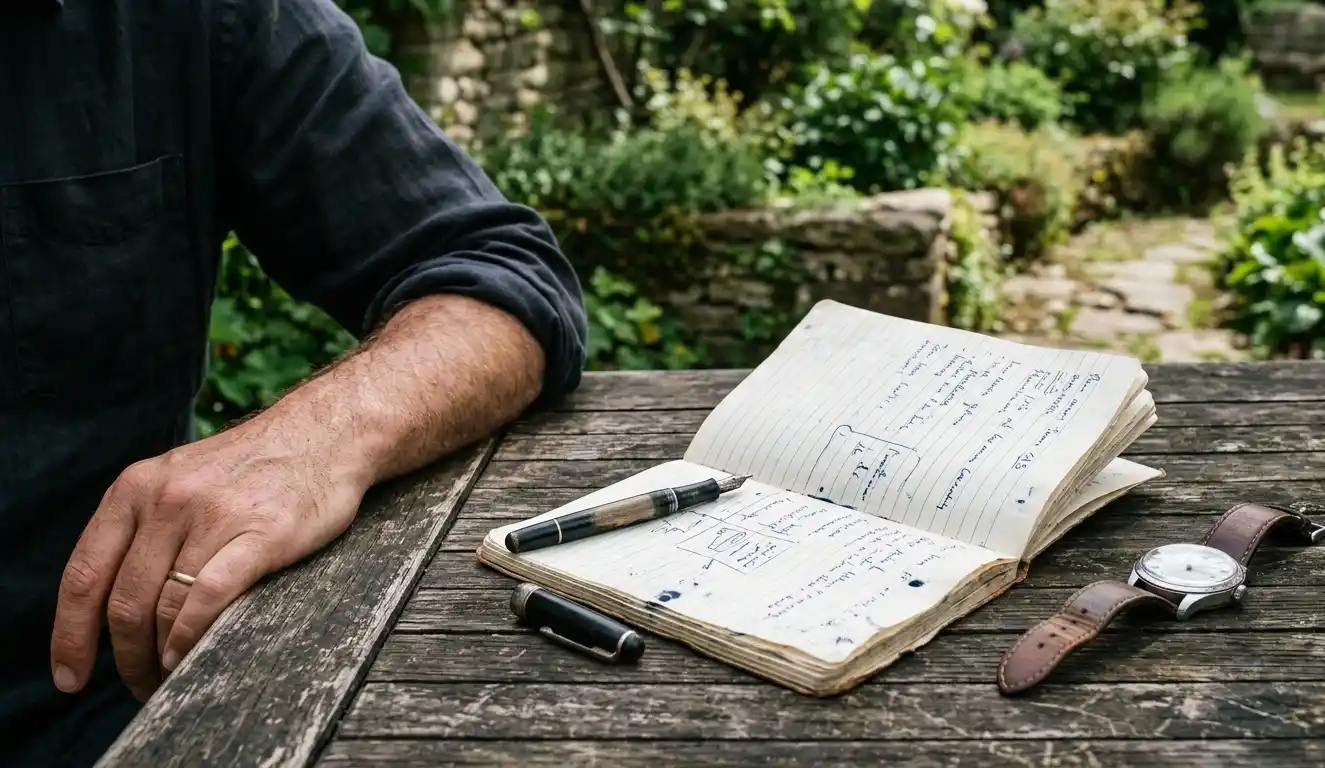
In the end, a notebook doesn’t know you exist. It won’t nudge you, reward you, or tell anyone what you wrote. That might be the whole point. It offers something far more grounded: the simple, enduring satisfaction of a thought captured clearly, written down and kept entirely for yourself.
“As technology becomes increasingly frictionless, many people are finding unexpected value in tools that slow them down just enough to make decisions more deliberate.”