Stop Buying Clothes. Start Building a Wardrobe.
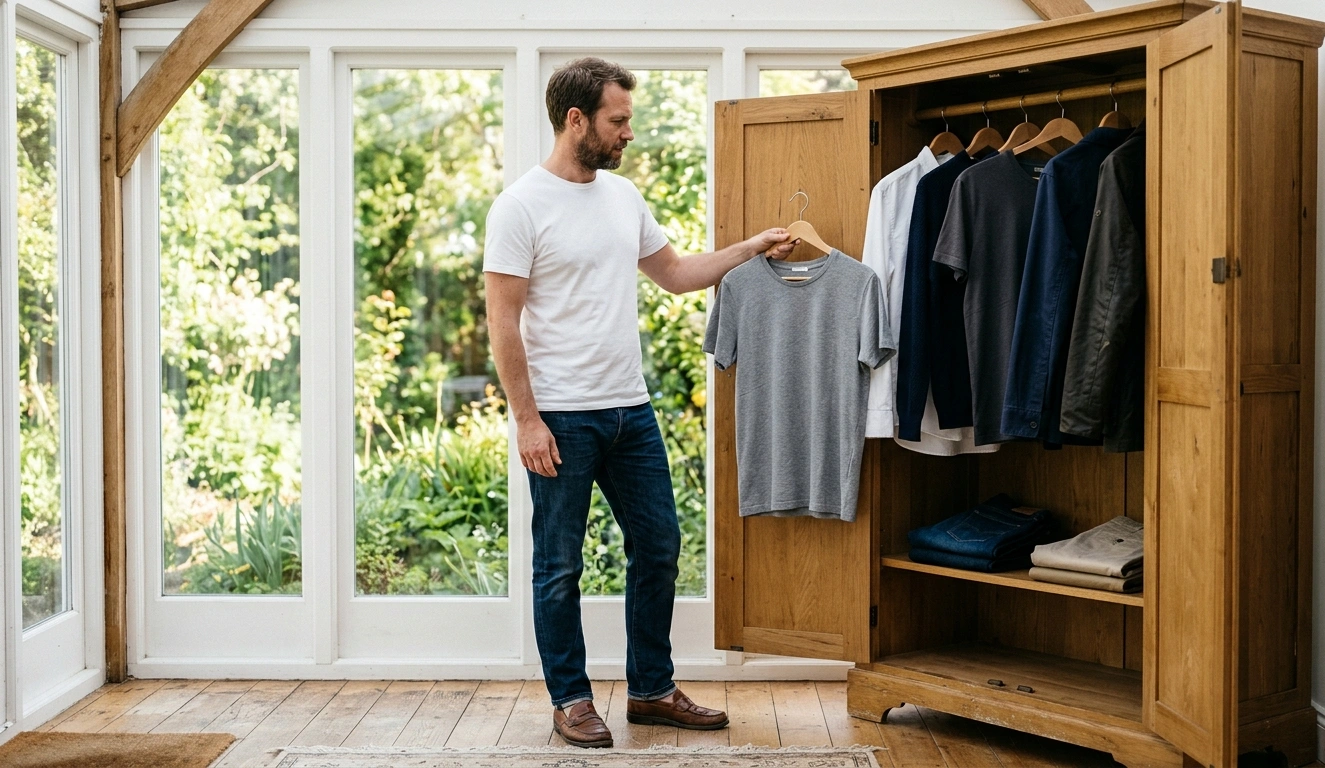
Open a typical wardrobe and the problem often reveals itself straight away. Rails packed with shirts, jackets and trousers, yet somehow nothing feels quite right. Pieces bought on impulse sit untouched. Trend-driven purchases fade almost as quickly as they arrived. Some garments barely make it beyond a single outing before disappearing into the back of the cupboard.
The best clothes? You forget you even own them.
The issue with most wardrobes isn’t what’s missing. It’s the opposite. Too many clothes, too little thought. Men often assume they need more, when the real problem is they’re drowning in choices. The most reliable wardrobes are built around a handful of pieces that earn their place through constant use. They are the clothes that never require a second thought. You reach for them automatically because they always work.
Of course, it’s tough to resist when every shop and social feed shoves the latest trend in your face. Every season brings a new palette, a new silhouette, a new reason to feel like you’ve already fallen behind. It’s a convincing trick. Men don’t need more clothes, they just need to wear what they’ve got.
Build Around What You Actually Wear
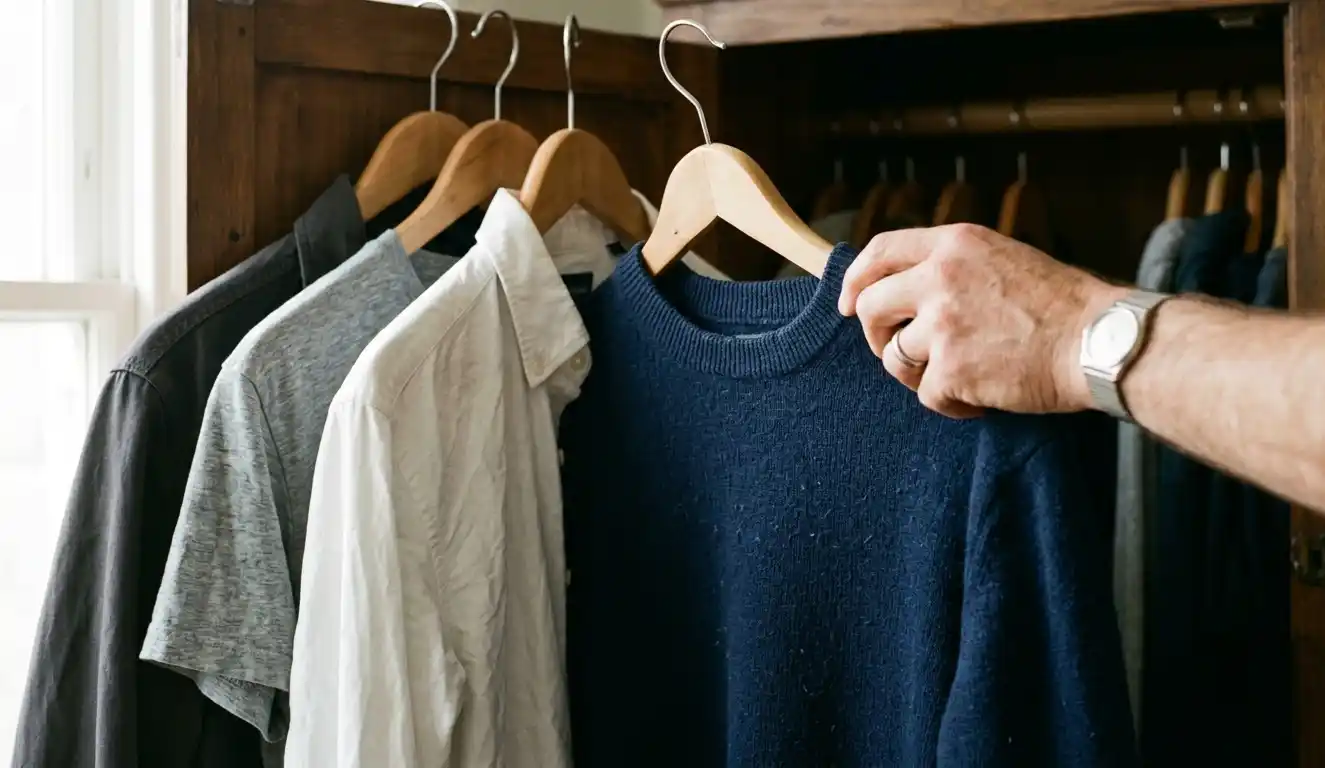
The best clothes? You forget you even own them. That old navy jumper, those broken-in jeans. They’re the ones you grab without thinking. If a shirt only works with one pair of trousers, it’s probably not worth the space.
Get the basics sorted and suddenly your wardrobe stops fighting you. Outfits come together without much effort. You stop standing in front of the wardrobe at 7 am wondering why nothing works. Instead of trying to force unrelated pieces into a look, everything begins to work as part of the same system. The result is flexibility, not because you own more clothes, but because the clothes you own actually connect with one another.
Pieces That Do the Heavy Lifting
Most well-functioning wardrobes share a few essentials. A properly fitted white T-shirt is a game-changer. Not too tight, not like a sack, just right. Add a black one to the rotation and suddenly getting dressed in the morning is half the battle won. Well-cut trousers provide a dependable base for countless combinations, while a straightforward pair of jeans offers the kind of reliability that never goes out of fashion.
A well-shouldered jacket instantly smartens up denim or a basic tee. Shoes do the same heavy lifting. A solid pair of boots or loafers ties disparate pieces together, making the whole lot feel intentional.
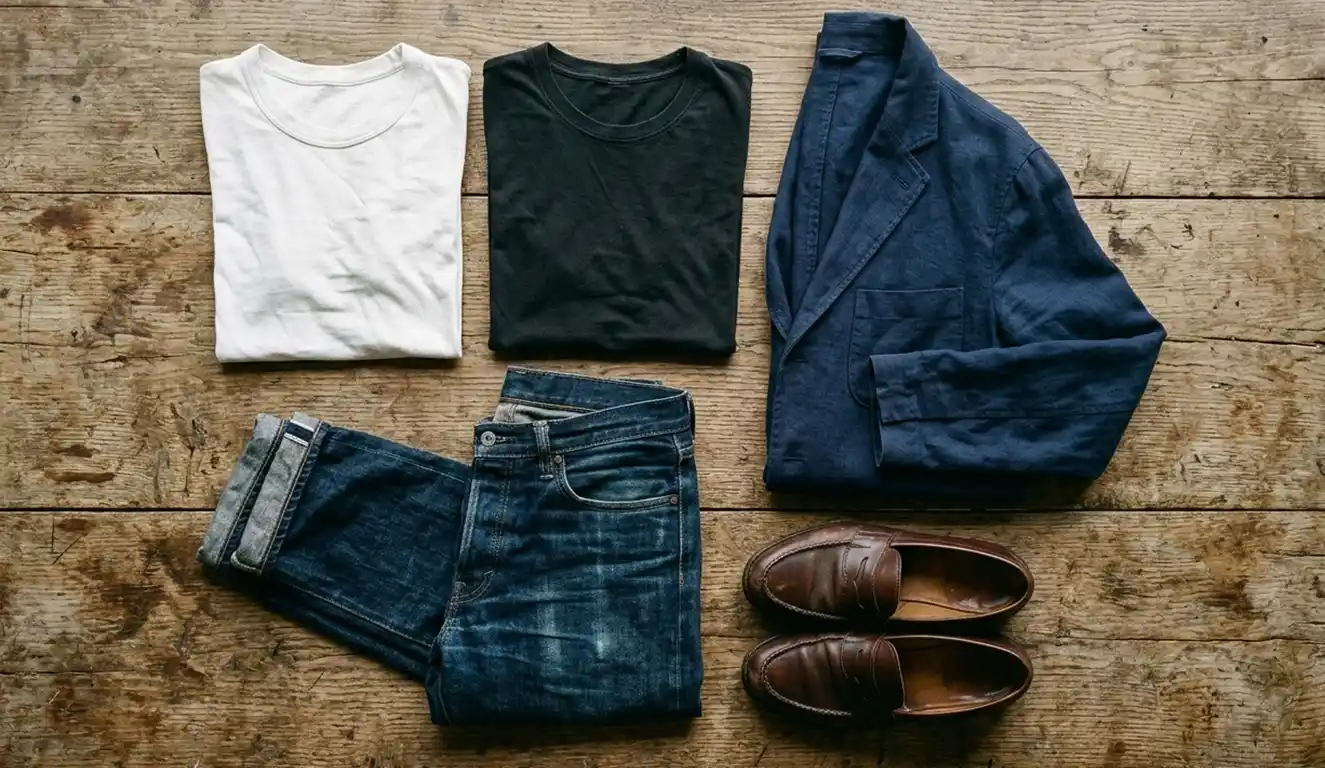
None of these pieces are designed to grab attention on their own. Their value comes from how often they are worn and how naturally they fit into everyday life. Together, they form the framework that supports almost everything else.
Good Wardrobes Go Wrong
What usually derails people isn’t bad taste. It’s that spur-of-the-moment buy that only made sense for about ten minutes. Sometimes it’s a shirt bought on holiday that never quite fits into everyday life. Other times it’s a trend that burns brightly on social media before vanishing without a trace. Then there’s the statement piece that feels exciting in the shop but difficult to wear afterwards. Most men have experienced it. The initial enthusiasm fades and the item gradually becomes another forgotten hanger taking up space.
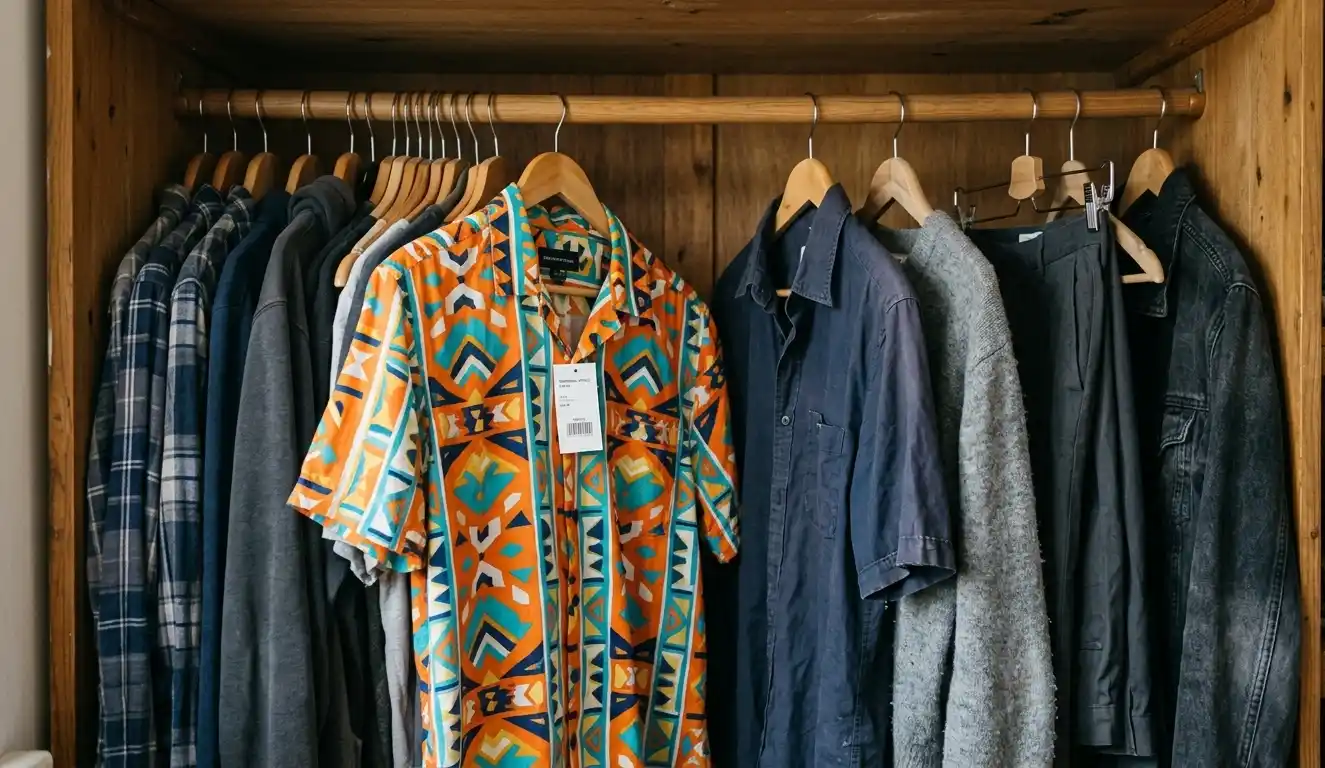
A better approach is to think about rotation rather than excitement. Before adding something new, consider how often it will realistically be worn. Does it work with clothes already in your wardrobe? Can it be styled in several ways? Will you still be reaching for it months from now? Questions like these often reveal whether a purchase has genuine value or simply temporary appeal.
Treat your wardrobe like a toolkit, not a museum. If you’re not wearing it, why own it? If you own it, wear it. Over time, this approach creates something far more valuable than a collection of garments. It creates consistency. Your style becomes clearer because it reflects your habits rather than the latest trend cycle. Getting dressed feels effortless because every piece has already proven its worth.
Related Article · MenswearBefore You Buy Anything New, Check the FitMost men focus on clothes, brands and trends. Yet fit remains the detail that quietly determines whether an outfit looks average or sharp.→In the end, it’s not about having piles of clothes. It’s about having the right ones. Forget about chasing novelties. Find your core pieces, stick with them and actually put them to work. When every item has a role and works alongside the rest, the search for something new becomes far less important.
Nail the basics and mornings become effortless. And that’s the dream, isn’t it?
“As wardrobes have grown larger, many men have become less certain about what actually suits them. More choice hasn’t created more personal style. In many cases, it has simply made it harder to recognise.”