One Watch, Several Different Looks
Most collectors work this out the hard way, usually after buying their third strap in a panic before a wedding: the watch itself barely matters. It’s the strap doing the talking. Change the strap and the watch suddenly fits wherever you take it, whether you are heading into a meeting or wandering around a market on a slow Sunday.
You will find it feels like a different watch.
The strap is easy to overlook. The case, dial and hands feel like the watch itself, the parts worth obsessing over. By comparison, a strap can seem like an afterthought, a mere strip of leather or metal whose only purpose is to hold the watch on your wrist. But spend a little time swapping straps and the illusion soon falls apart. In reality, most watches change character far more than people realise. Swap the strap and you will find it feels like a different watch entirely.
Changing the Character
Think of something like a plain steel field watch, the sort every ‘best watch to own’ listicle trots out. On a stainless bracelet, it reads clean and understated, something you could wear with a suit and not think twice about. Fit it with a slim tan leather strap and something shifts: the same watch softens, loosens its collar and starts to feel more at home with rolled sleeves and unpolished shoes. Put it on a rugged NATO strap and it drifts further still, into weekend territory: holidays, long walks, the kind of watch that doesn’t mind getting a bit of weather on it.

The movement and hands stay exactly the same, of course, but it hardly matters once the strap changes. Tone is most of what menswear is about anyway. Clothes signal intention. So does the strap on your wrist, often before anyone has clocked the watch itself.
Material as Mood
Leather brings a certain warmth to a watch. Over time, it picks up creases, softens and begins to carry little traces of the life around it. That makes it particularly well suited to watches that lean formal or classic, while also softening a sharp-edged design just enough to make it feel personal rather than corporate.

Metal bracelets do the opposite. They bring a certain coolness and precision, letting the engineering of the bracelet speak for itself. A bracelet can make a modest watch appear far more serious than it should, simply because its precise links catch the light in a clean, straight line.
Related Article · StyleThe Chinese Knot Making a Modern Menswear ComebackThe traditional Chinese pankou knot has moved beyond heritage dress, emerging as a distinctive detail in contemporary menswear design.→Fabric and rubber push things further into practical territory. Put a watch on canvas or a NATO strap and it instantly feels utilitarian, like something meant for actual work rather than mere admiration. Rubber, meanwhile, has shed its purely sporty reputation and now turns up on dressier pieces too, giving even a refined watch a bit of edge and resilience.
There’s no single correct choice. Each strap simply sets a different mood. A knit tie and a silk one do the same job, but nobody’s confusing the two.
Colour Does Quiet Work
Strap colour rarely gets the attention it deserves, yet it shifts a watch’s character just as much as material does. A black strap keeps things sober and versatile, disappearing neatly under a cuff. Brown, particularly in its lighter, sun-worn shades, brings warmth and a slightly more relaxed air. Navy sits somewhere between the two: quietly confident, easy to wear and hard to get wrong with denim, tailoring or a simple knit.
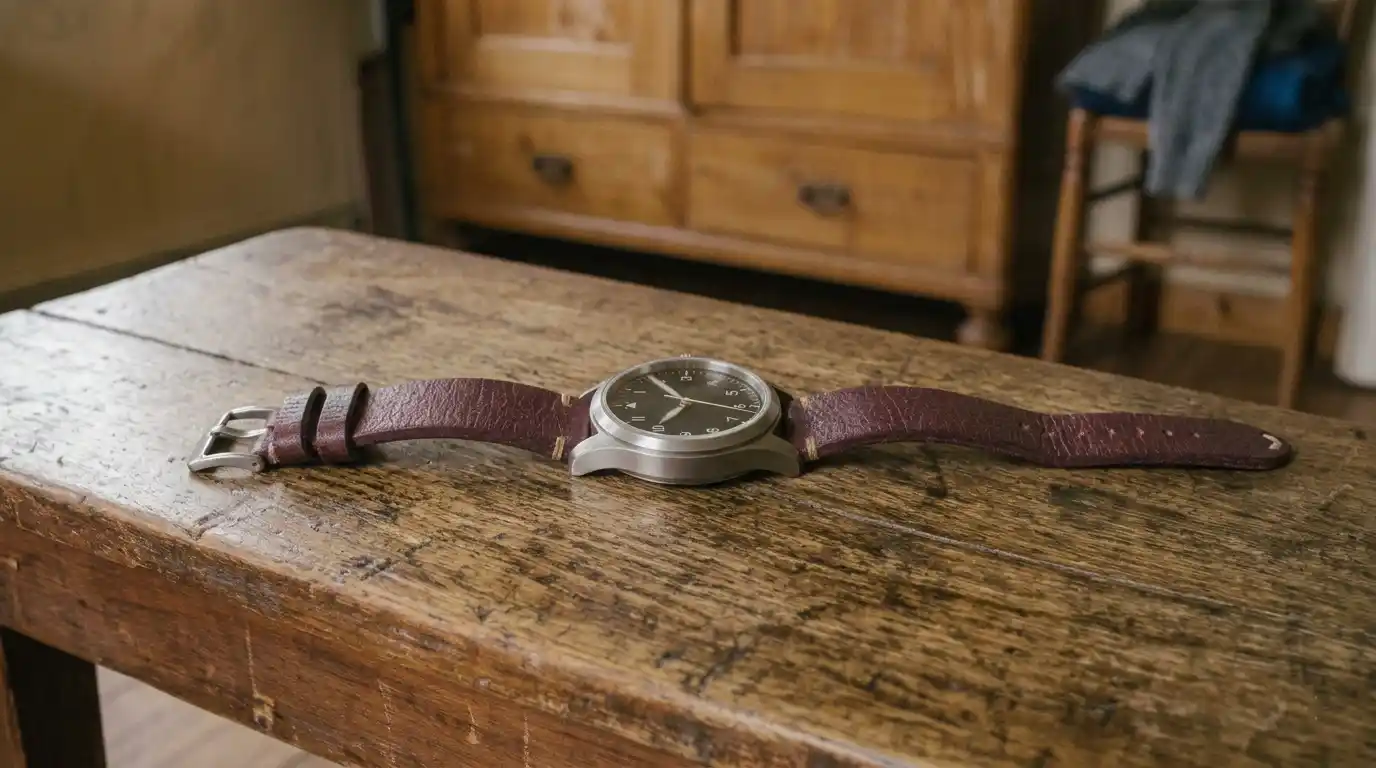
Bolder colours, such as greens, burgundies and the occasional orange stitch, are where a watch starts to say something about the wearer rather than the object itself. When you use them with a bit of restraint, they brighten a simple outfit without drawing too much attention.
Why the Strap Matters
Buying half a dozen straps instead of half a dozen watches makes obvious financial sense. You save money and drawer space while keeping your rotation fresh. More importantly, though, it changes how you look at the rest of your wardrobe. It asks you to think about occasion, texture and tone in exactly the way a good jacket or a good pair of shoes does.

The strap sits against your wrist all day, every day, quietly shaping how the watch feels every time you wear it. Switch it and the watch suddenly feels different, yet you have barely spent anything to achieve it.
“Men’s style is increasingly less about owning more and more about finding new ways to make familiar things feel relevant again, turning personal taste into a matter of subtle adjustment.”