Jackets with a Story
Look into the wardrobe of almost any man and, past the rotation of seasonal purchases and crisp utility shirts, you will often find an anomaly. It’s usually a jacket.
They stopped being ordinary clothes long ago.
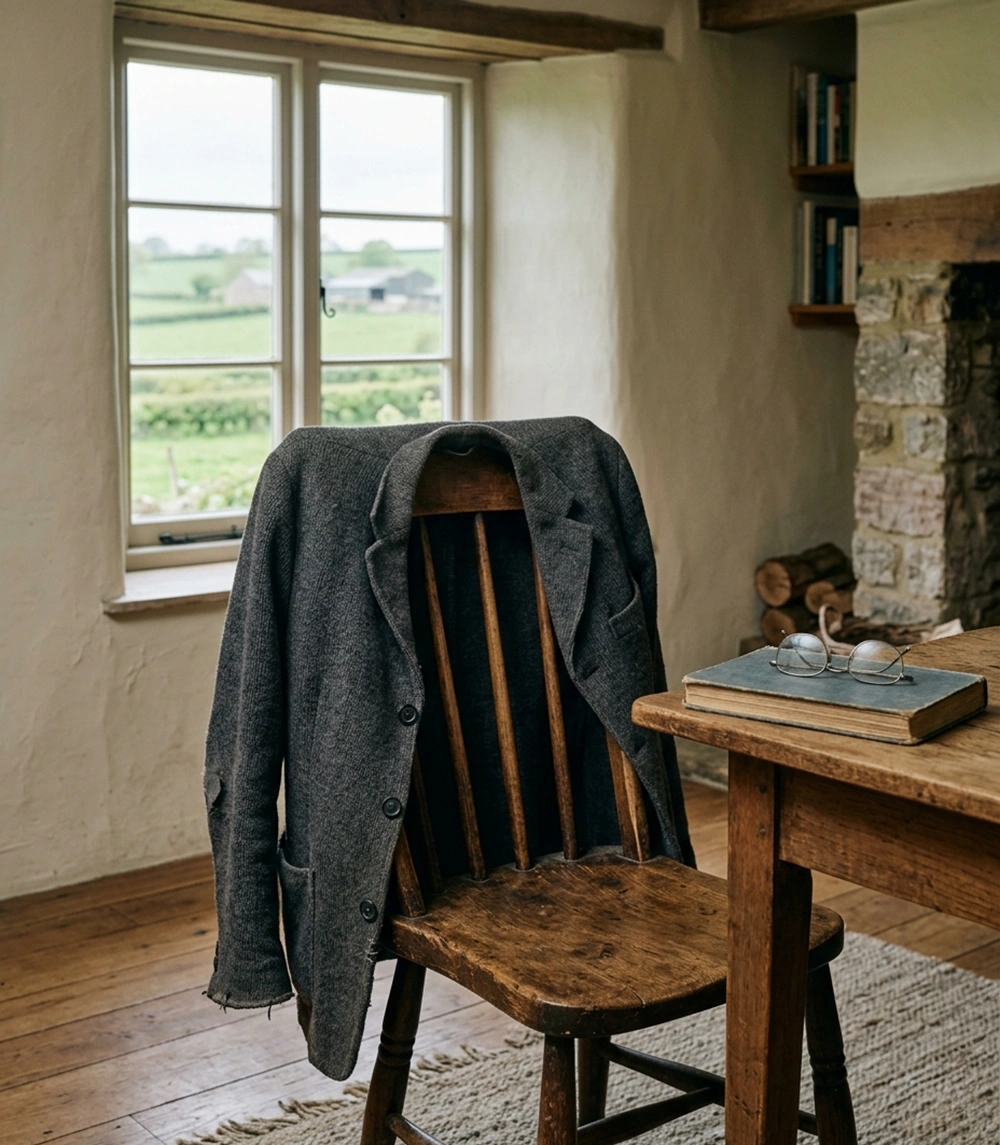
Slumping a little to one side, the wooden hanger bends from years of bearing its weight. It’s a garment that has long outlived its statistical lifespan, showing signs of structural fatigue that would sentence any other piece of clothing to the bin. Yet, it remains.
Most men aren’t sentimental about clothes. And yet. Go far enough into any wardrobe and you’ll usually find one thing that shouldn’t still be there. A jacket that’s falling apart. That nobody can seem to get rid of. They soften with use. Collect scars. And somewhere along the way, they stop being fabric and start feeling like a story you didn’t know you were telling.
“He wore it when we spent a year rebuilding an old stone barn on the edge of our property. It was the last major project we did together before he passed.”
In a quiet workshop in England’s North Yorkshire, David Thorne (46) runs his thumb along the cuff of a heavy, olive-green waxed cotton jacket. The colour has faded into a muddle of browns and greys, with the odd glint of gold that only years of weather can leave behind. The scent of linseed oil and damp earth clings to the canvas.
“This was my father’s,” David says, his voice carrying the soft cadence of the dales. “He wore it when we spent a year rebuilding an old stone barn on the edge of our property. It was the last major project we did together before he passed.”
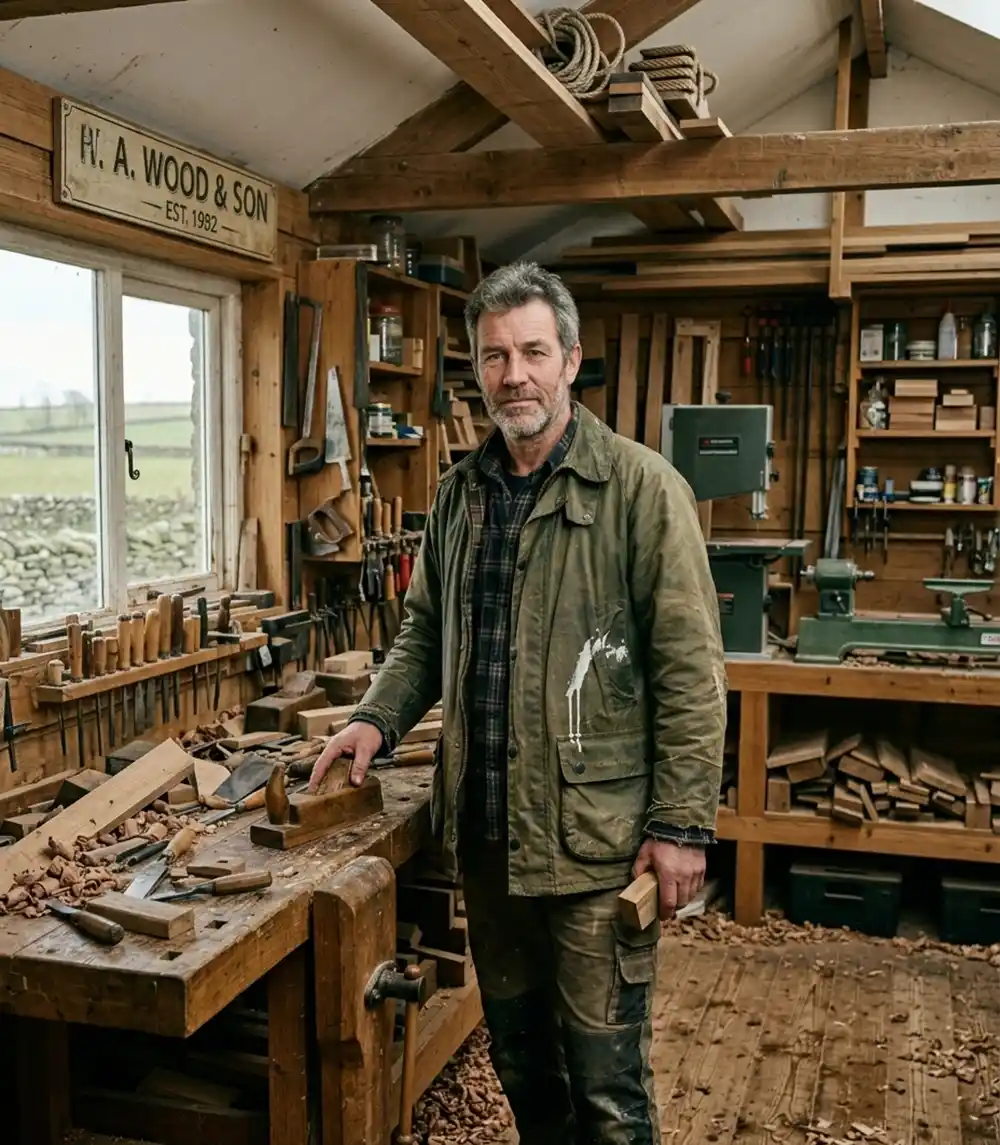
The jacket is stiff, having moulded itself over decades to the contours of two different men. On the left pocket, a stubborn streak of dried white wood glue remains entirely intact. “I remember the afternoon that happened,” David smiles. “It was raining torrents, the roof was leaking and my dad laughed so hard at our clumsiness that he knocked a tin of adhesive right over himself. I could clean it off, I suppose. But then I’d be wiping away that afternoon, wouldn’t I? Every time I put it on, I feel the breadth of his shoulders behind mine. It’s not about nostalgia, it’s about alignment.”
“He took me back to his cabin, gave me hot tea and noticed my jacket had caught on a sharp piece of chassis iron while I was trying to fix the engine.”
Liam Vance’s (38) jacket started as exactly what it looked like: something to keep the weather out. Over in the rugged wilderness of British Columbia in Canada, Liam knows exactly how a piece of clothing makes that leap from utility to memory. He spends months in isolation, documenting the Canadian wilderness. His constant companion is a heavily distressed canvas field jacket, bleached pale by the northern sun and stained with the grey mud of glacial rivers.
There is a rough tear across the chest, held together with a line of bright green fishing thread that looks as though it was done in a hurry.
“A souvenir from the Yukon,” Liam reflects. “Six years ago, my truck broke down during an unseasonal blizzard. I was stranded for fourteen hours before an elderly Indigenous hunter found me. He took me back to his cabin, gave me hot tea and noticed my jacket had caught on a sharp piece of chassis iron while I was trying to fix the engine. He didn’t have regular thread, so he used his fishing line to patch it up.”
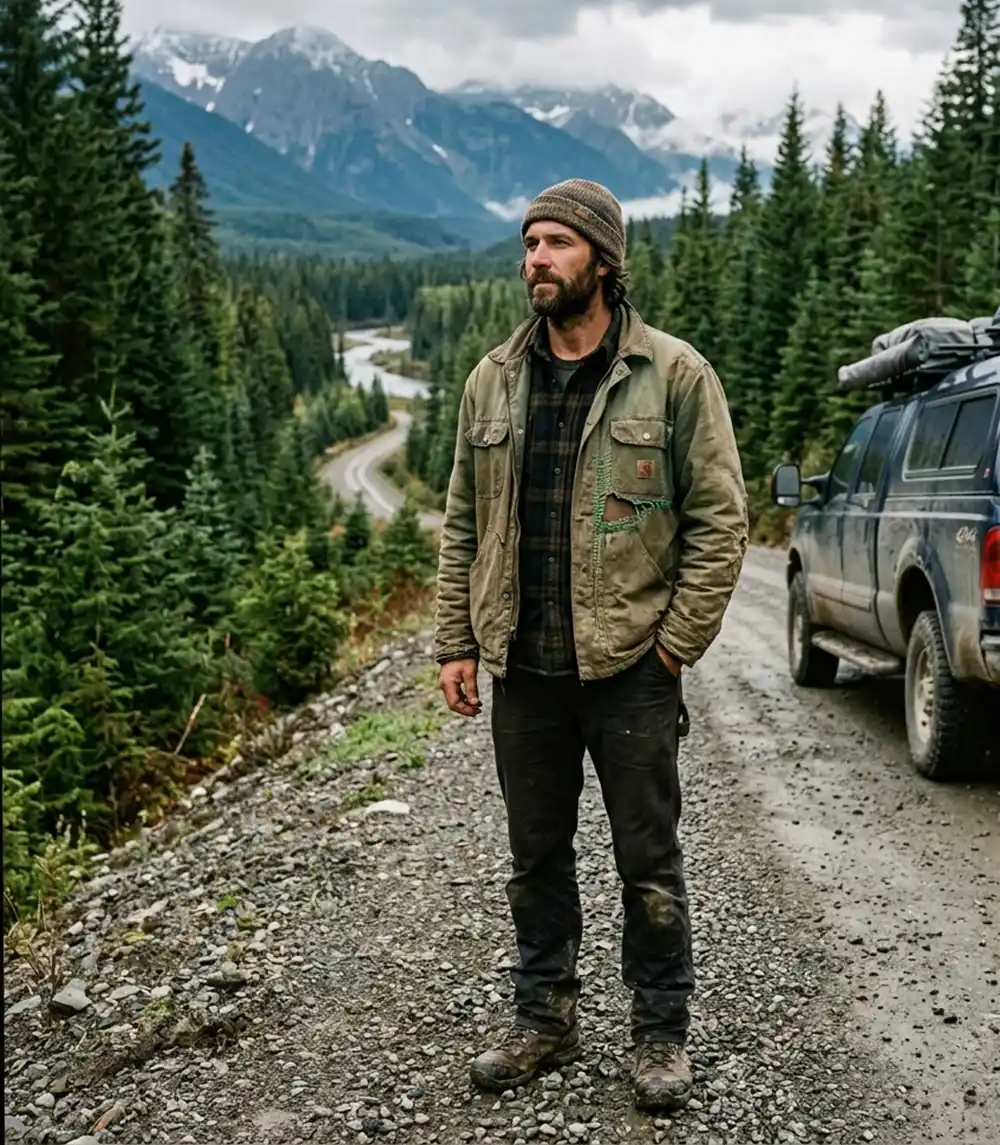
The bright green thread cuts a stark line across the sun-bleached fabric. For Liam, the imperfection is the most beautiful part of the garment. “It reminds me of vulnerability, but more importantly, it reminds me of unexpected kindness in a freezing world. The jacket is tough, but that repair shows exactly where it broke and how it was healed.”
“I had no money, a mountain of self-doubt and a script nobody wanted to read. I wore it to every single meeting, using the deep pockets to hide my shaking hands.”
In Seoul, the damage looks different. Less wilderness, more city. The kind that accumulates quietly, over years, in basement offices and late-night cafés. In South Korea, Park Min-ho (32) sits in a basement editing suite. Hanging over the back of his chair is an oversized wool blouson, its deep charcoal fabric worn thin at the elbows. The cuffs are frayed to the structural threads, a result of years spent resting against camera rigs and cold café tables.
“I bought this at a flea market in Dongdaemun when I was twenty-two,” Min-ho says, adjusting his glasses. “I had no money, a mountain of self-doubt and a script nobody wanted to read. I wore it to every single meeting, using the deep pockets to hide my shaking hands.”

The jacket became Min-ho’s armour during a decade of creative struggle. It was the garment he was wearing when he received the late-night email confirming his first short film had been accepted into an international festival. “The wool has lost its structure and it smells faintly of a thousand late-night coffee shops,” he says. “My mother keeps offering to buy me a newer, smarter coat now that my work is established. But this jacket knows how hard it was to get here. It keeps me grounded when the industry gets too loud.”
“The red stitching? That was my grandmother’s work. I slid out on a wet patch of tarmac last year and tore the arm open. She didn’t just mend it, she made it stronger.”
Thousands of miles south, in the humid, mountain-ringed city of Bandung in Indonesia, the relationship between a man and his jacket takes on a different rhythm, dictated by tropical rains and the camaraderie of the road. Bintang Prasetyo (24) navigates the city’s notoriously chaotic traffic on a vintage Vespa. His uniform is a heavy denim trucker jacket that has turned a ghostly, washed-out indigo at the joints.
On the right sleeve, a beautiful geometric patch of red thread stands out. An intricate piece of sashiko repair.
“My older brother handed this down to me when I left our village for university in the city,” Bintang explains, tapping the handlebars of his scooter. “It was a token of protection. The grease marks around the hem are from the times this scooter broke down on the highway at midnight. The red stitching? That was my grandmother’s work. I slid out on a wet patch of tarmac last year and tore the arm open. She didn’t just mend it, she made it stronger.”
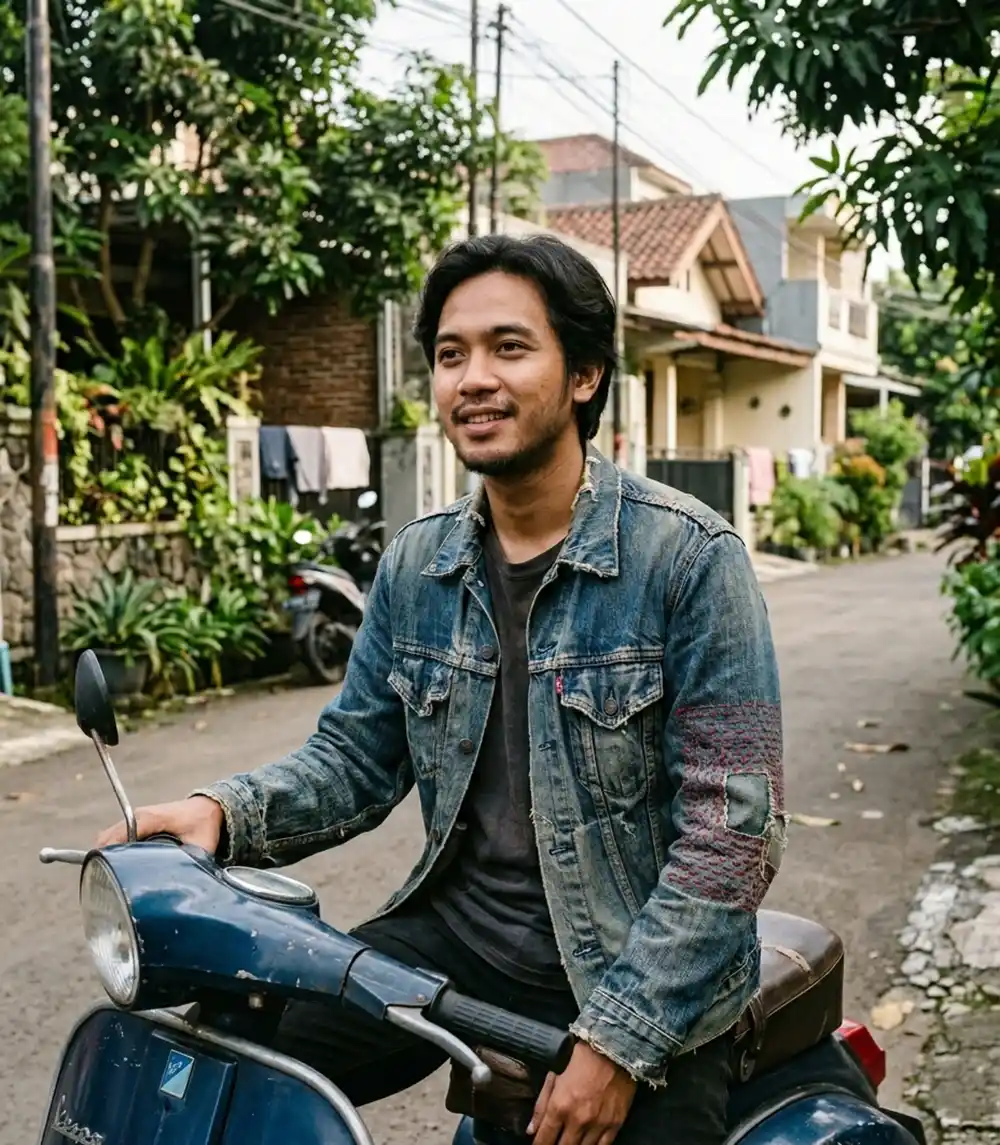
For Bintang, the jacket is an evolving canvas of his independence. The stains are not blemishes to be laundered away. They are milestones of survival and reminders of a family network that extends across the archipelago. “In the heat, it can be uncomfortable,” he admits. “But wearing it makes me feel like I am carrying my home on my back.”
“It’s full of mistakes, age and hard work. It connects my modern life to the industrial history of my family. It reminds me of where my hands came from.”
This sense of carrying one’s heritage through a garment is felt with equal reverence in the historic quarters of Western Europe. In the French city of Lyon, Lucas Dubois (29) spends his days in a pristine, white-tiled kitchen. Yet, his journey to work each morning is spent wrapped in a vibrant, though softened, bleu de travail. The classic French cotton chore jacket.
The jacket belonged to his grandfather, who wore it during a forty-year career in a textile mill in the Rhône valley. The intense ink-blue dye has faded to the shade of a twilight sky and the fabric has the limp, comforting softness of flannel. Near the bottom pocket, small white spots reveal where bleach or flour has altered the cotton over the decades. The original plastic buttons have long since disappeared, replaced by a mismatched set of carved horn buttons sewn on by Lucas’s mother.
“When I put it on, I immediately feel the weight of honest labour,” Lucas says, looking down at his grandfather’s initials faintly inked into the inner collar. “In my job, everything must be perfect, precise and immaculate. But this jacket is a relief from perfection. It’s full of mistakes, age and hard work. It connects my modern life to the industrial history of my family. It reminds me of where my hands came from.”
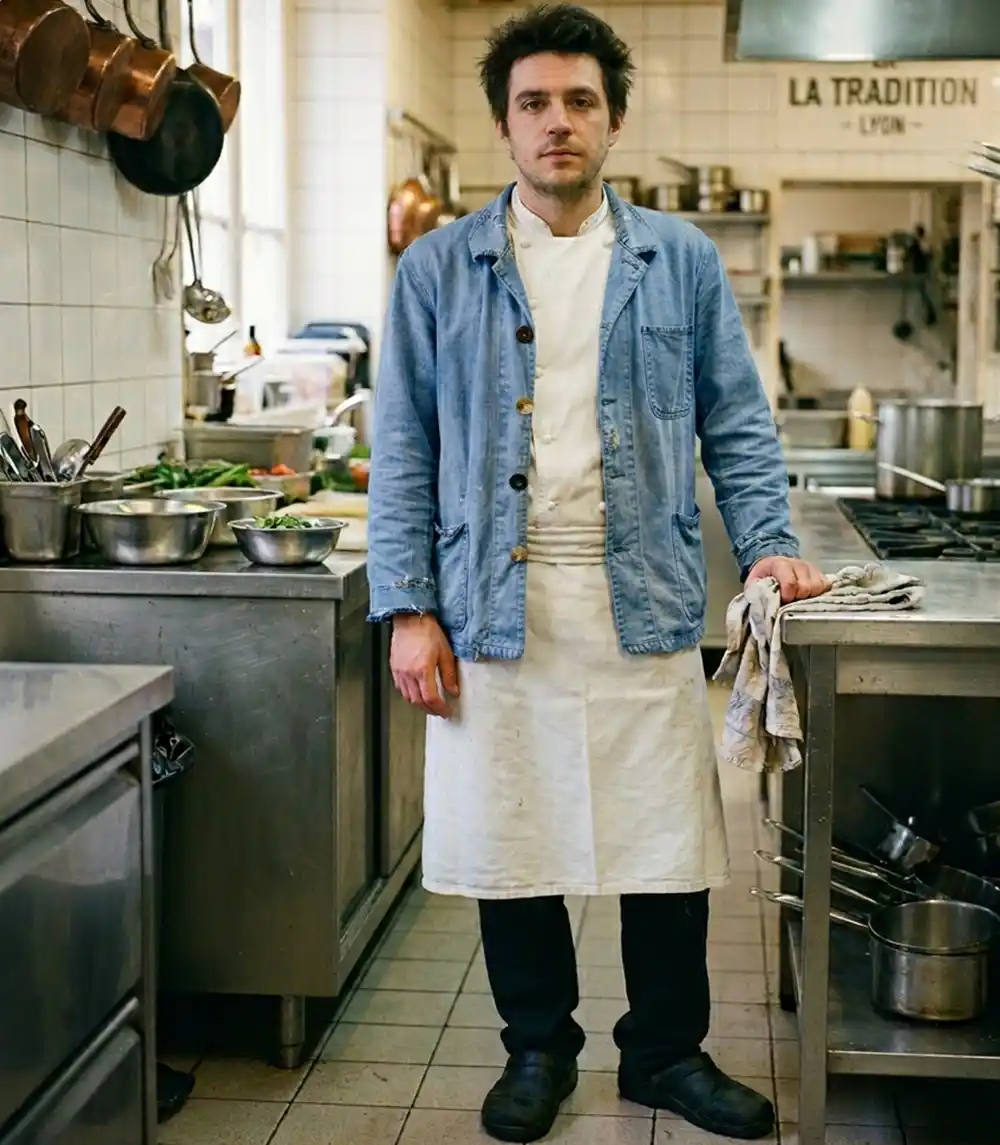
None of them went looking for a meaningful jacket. It just turned out that way. Their jackets have ceased to be mere consumer goods. They have become active conversations with their own pasts. “You can’t buy this off a rack,” Lucas says. He doesn’t elaborate. The jacket says the rest.
It’s a sentiment echoed across oceans. In Seoul, Min-ho looks at his frayed wool cuffs not as damage, but as documentation. “If I bought a new coat today, it would only reflect who I am right now,” he reflects. “This one holds the anxious boy I was and the filmmaker I became. To throw it away would feel like discarding a piece of my own identity.”
In a world that constantly encourages us to shed the old and adopt the new, keeping a garment for decades becomes a quiet act of devotion. The value of these pieces lies precisely in their vulnerability to the lives lived within them.
Related Article · LifestyleSignature in the Air: Some Men Wear One Scent for LifeFor some men, a signature fragrance becomes ore than a scent. It evolves into a marker of memory, identity and continuity across decades.→“A pristine jacket tells no stories,” Liam observes from his cabin in British Columbia, tracing the bright green fishing line running across his canvas coat. “The scar is the whole point. It’s the map of where I’ve been.” For Bintang in Bandung, those scars are a source of profound pride rather than neglect. “People ask why I don’t just buy a new one,” he smiles, tapping his denim sleeve. “But a new jacket hasn’t survived a midnight breakdown on the highway with me. It hasn’t been touched by my grandmother’s hands.”
In the end, the jackets matter because they remind these men of the people who shaped them. They allow the men to carry their history with them into the modern world.
“It will go to my own son eventually,” David says quietly back in his Yorkshire workshop, his hand resting on the stiff, glue-stained pocket of his father’s coat. “The wood glue stays. It’s part of the inheritance.”
Related Article · LifestyleMore Than a Shave: Conversations with a Barber in BaliA traditional shave in Bali becomes a reflection on routine, trust and the quiet bond between a barber and customer in the heart of Kuta.→These imperfections are the visual shorthand of lives fully lived. The stubborn glue, the nylon fishing line, the frayed charcoal wool, the road grease and the twilight blue.
Those stubborn stains and frayed threads are far from blemishes. They are the very substance of the piece, turning a bit of old fabric into something entirely irreplaceable. It’s why, despite the thinning fabric and the passing years, these garments remain entirely impossible to replace. They stopped being ordinary clothes long ago and have become the way these men carry their memories.
“As wardrobes become more curated and consumption more disposable, the items men keep longest are often the ones least valued by fashion and most valued by memory.”