A Walk Through the Wardrobe District: Savile Row and Mayfair in London
First in a series about the neighbourhoods where menswear is actually made, worn and argued over. We begin in London, on a street you can walk in three minutes and in the Mayfair blocks around it that keep the whole trade moving.
You could cover it in three minutes with your eyes forward.
Ten in the Morning, North End
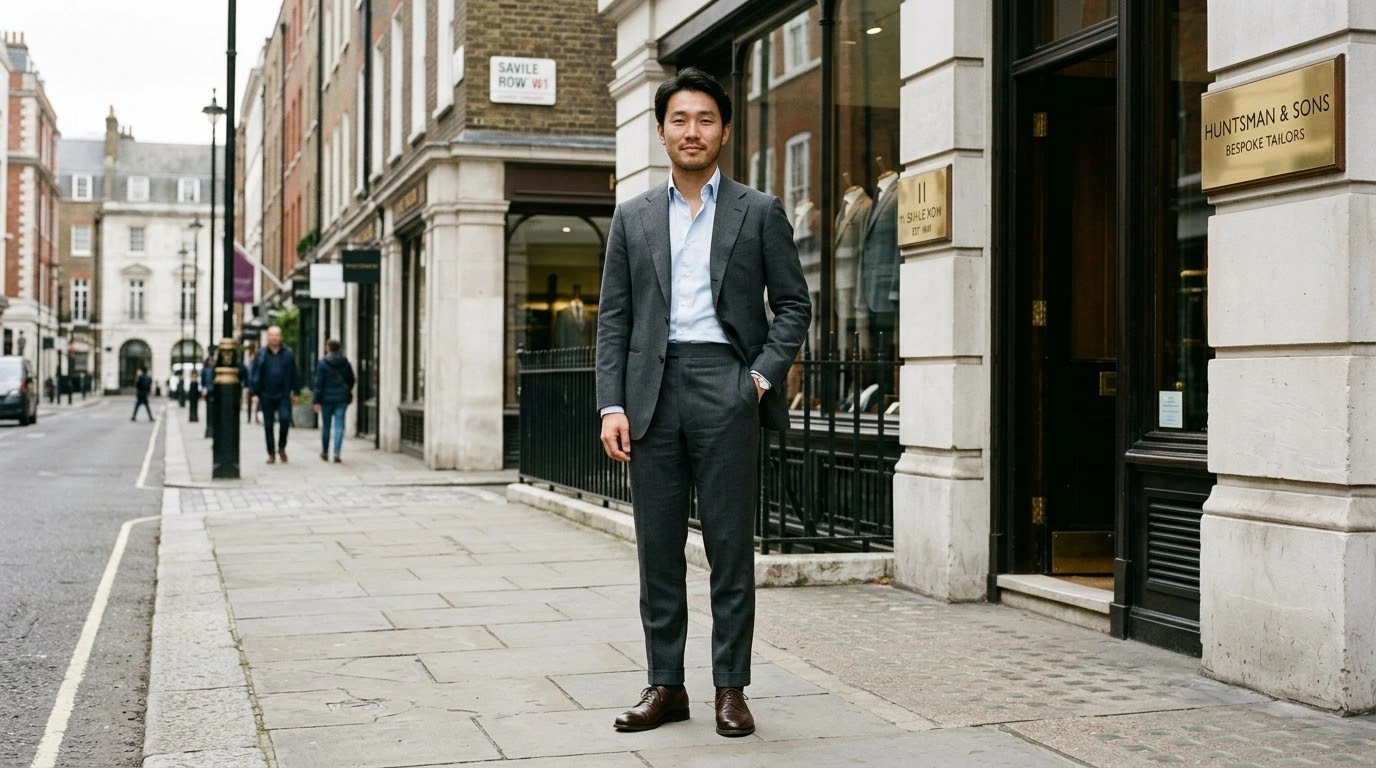
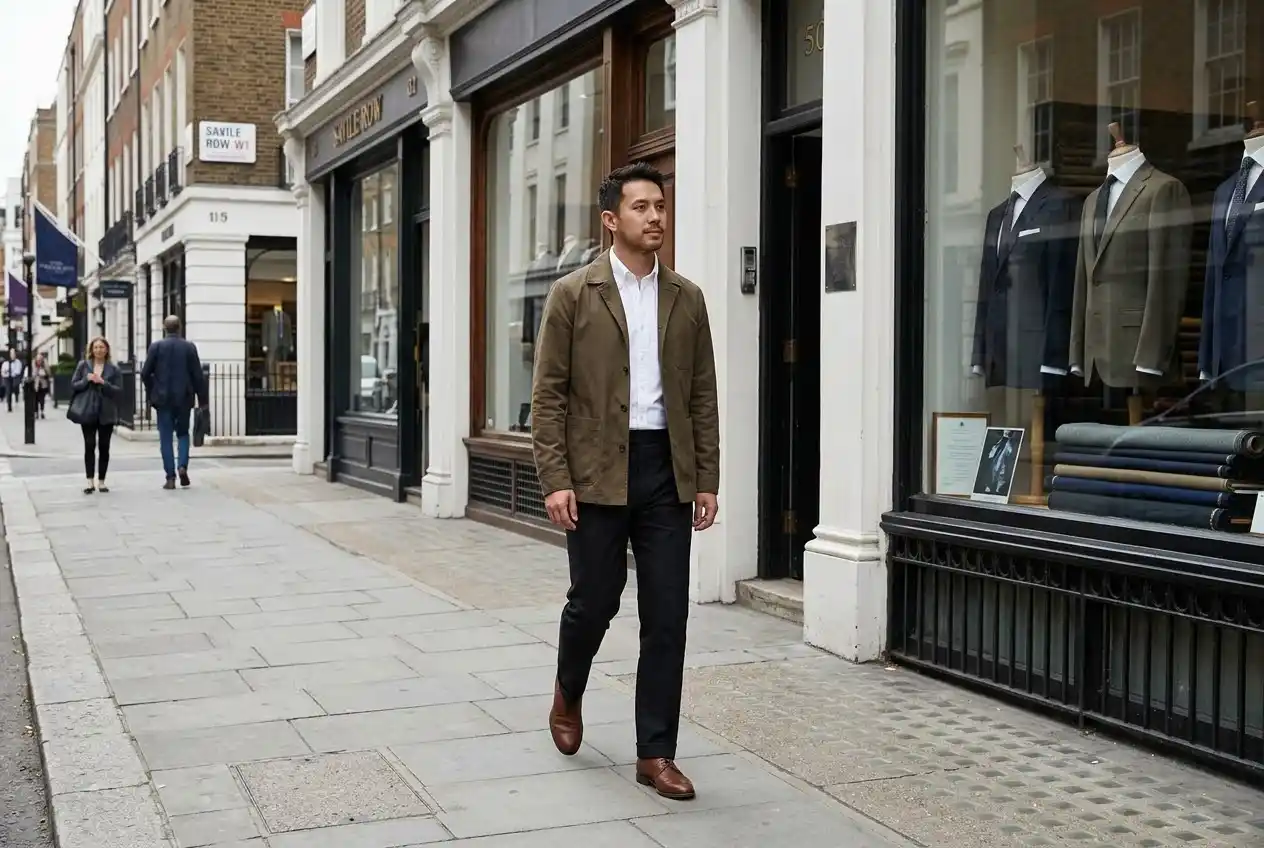
Savile Row is shorter than its reputation. One block of brick and stone running from Conduit Street down to Vigo Street. You could cover it in three minutes with your eyes forward. Nobody covers it in three minutes. The windows keep interrupting: a length of grey flannel folded over a rail, a tweed shooting coat on a headless form, a wall of cloth books arranged like library stock, a single dinner jacket lit as carefully as a painting.
The second interruption is under your feet. At several of the houses the workrooms sit just below the pavement. Through the railings of the lightwells you can watch the trade happening: strip lighting, brown-paper patterns hanging from hooks, a presser leaning his whole weight into an iron, jackets in various states of undress waiting on rails. Savile Row still makes what it sells, on site, and it doesn’t particularly mind being watched doing it.
“It begins with a pattern drafted in brown paper from a couple of dozen measurements and a page of notes no tape can take: how the man stands, which shoulder rides lower, whether he keeps a phone in his breast pocket.”
The street was laid out in the 1730s on the Burlington Estate and named after Lady Dorothy Savile, the Earl of Burlington’s wife. The tailors arrived over the decades that followed, drawn by military commissions and court dress, and by the middle of the nineteenth century the name and the trade were welded together. That is as much history as a walk requires. What matters this morning is that the trade never left and that it stayed dense: cutters, coat makers, trouser makers, finishers and pressers all working within a few hundred metres of one another, close enough to argue about a seam before lunch.
Henry Poole & Co has been part of that story longer than anyone. Founded in 1806 as military tailors and on the Row since 1846, the firm cut a short evening coat for the Prince of Wales in 1865 so that he could dine at Sandringham without tails. The world now calls that garment the dinner jacket. Poole’s remains a family business. Simon Cundey, the seventh generation, runs it from number 15, where ledgers reaching back to 1846 record the orders, some of them water-stained from the night in 1940 when a bomb hit the street. More telling for the street’s future, Cundey has spoken recently of a surge in young people applying for apprenticeships. The Row is hiring.
A few doors along at number 11 sits Huntsman, cutting bespoke suits since 1849 and known for a firm, single-button house style with the posture of a riding coat. The cutting room includes co-head cutter Dario Carnera and the cutter’s part of the work is worth slowing down for. It begins with a pattern drafted in brown paper from a couple of dozen measurements and a page of notes no tape can take: how the man stands, which shoulder rides lower, whether he keeps a phone in his breast pocket. Then chalk on cloth, long shears and the irreversible business of striking. The cutter is the architect of a bespoke suit. Coat makers, trouser makers and finishers do the building, and a single commission passes through many pairs of hands before anyone calls it finished.
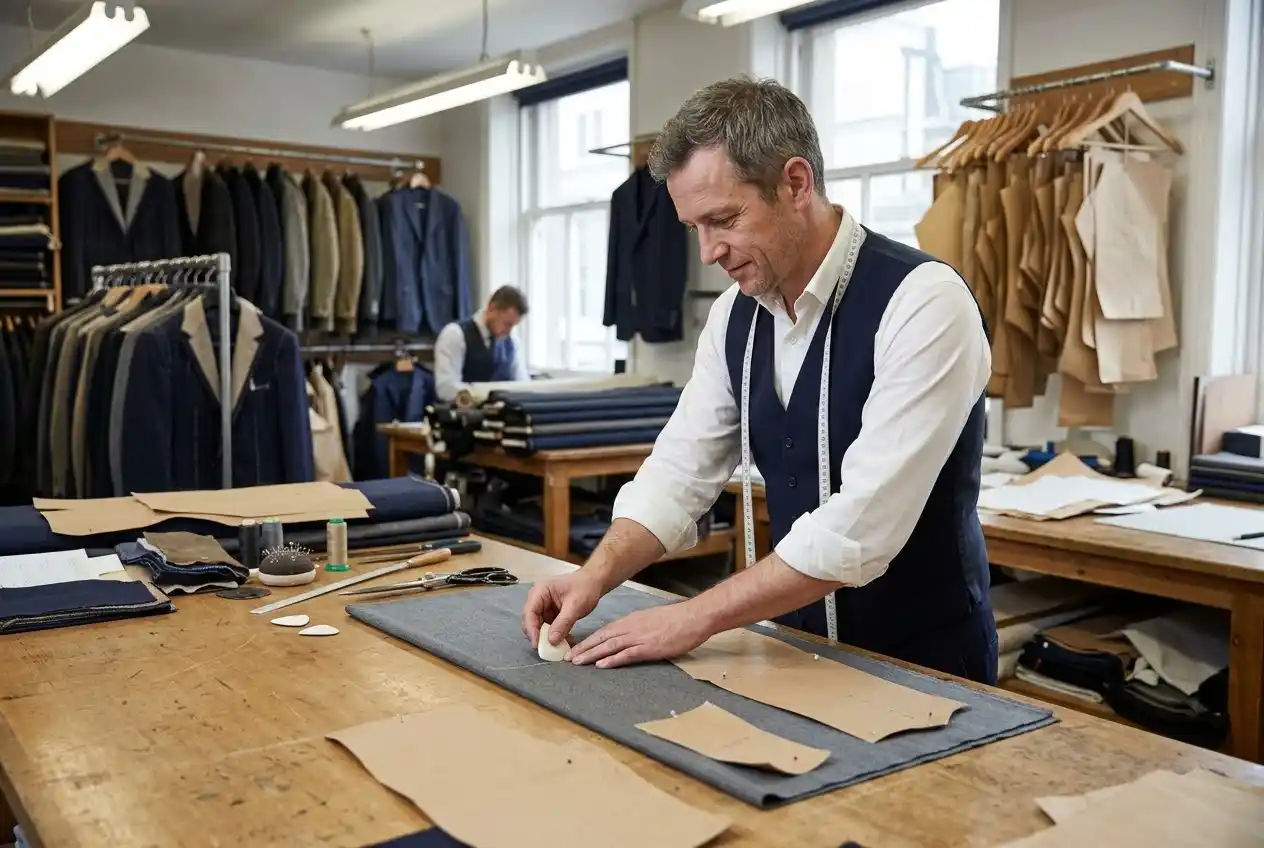
There are rules underneath all this. The Savile Row Bespoke Association, formed by the houses in 2004 to protect the trade’s standards, says its members typically put at least fifty hours of hand work into a two-piece suit. And since 2016 the street has had planning protection too: Westminster designated Savile Row a Special Policy Area, a measure designed to stop the home of British tailoring being rented out from under it. The romance gets the headlines. The district runs on regulation, training and repeat customers.
The Cloth Library
A bespoke suit does not begin with a tailor. It begins with a conversation about cloth and on this street the cloth has its own address. Holland & Sherry have been cloth merchants since 1836, when they set up at 10 Old Bond Street dealing in woollens and silks. They arrived on the Row in 1982 and now trade from number 31, with distribution run from Peebles in the Scottish Borders. Inside, the stock lives in bunches: small hinged books of swatches, hundreds to a wall, each one a possible suit in miniature.
“A cutter sends a client along the pavement in the middle of a commission. A merchant rings the shop when a new bunch lands that suits somebody’s book. Neither business works alone and neither pretends to.”
Run a thumb across them and the differences arrive faster than the vocabulary for them. Worsted is smooth and cool, pressed flat as paper. Flannel carries a nap that shadows when you brush it against the grain. A high-twist cloth springs back in the hand like turf. Tweed holds its pattern in depth, colour under colour, and a good linen already looks better slightly crumpled. Weight is still spoken in ounces to the yard. A nine-ounce fresco feels made for high summer, woven open enough to let the wind through. An eleven-ounce worsted sits comfortably in the middle of a tailored wardrobe, while a fourteen-ounce flannel hangs heavy and straight, built for colder days and years of wear.
What an experienced merchant sells isn’t really the swatch. It’s the prediction. Whether a cloth will crease on a flight and recover overnight in a hotel wardrobe. Whether it will hold a trouser crease or forgive the absence of one. Whether that windowpane check reads as confidence or costume on the particular man asking about it. And, crucially for the neighbours, whether the cloth will make well: how it takes an iron, whether it lets a coat maker work shape into a chest or fights him the whole way. The mills that weave it are mostly a long way north, in Huddersfield and the Scottish Borders. The decisions about it are made here, a few steps from the cutting boards.
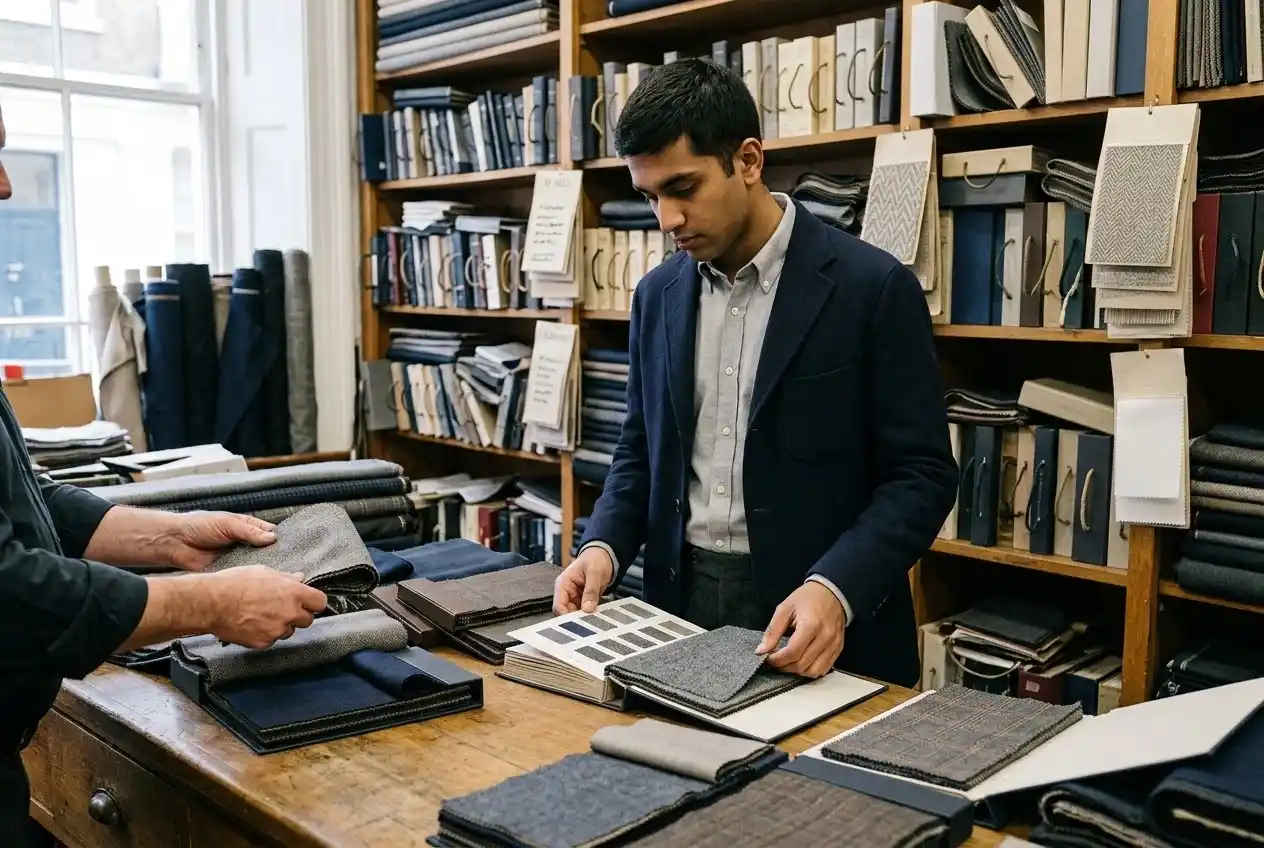
This is why cloth merchants and tailors form the quiet middle of the district. A cutter sends a client along the pavement in the middle of a commission. A merchant rings the shop when a new bunch lands that suits somebody’s book. Neither business works alone and neither pretends to.
An Arcade of Lasts
Leave the Row at its southern end, cross Burlington Gardens and carry on towards Old Bond Street. A few minutes’ walk brings you to the Royal Arcade, a short Victorian run of glass and curved shopfronts, and to George Cleverley, bespoke shoemakers. The firm carries the name of the shoemaker George Cleverley and was formed in 1978 by Cleverley, George Glasgow senior and the lastmaker John Carnera. Glasgow and his son, also George, run it today. The firm’s past clients have included Winston Churchill, but the shop itself is small and the real furniture is the lasts: carved wooden records of individual feet, shelved in their dozens, a client list in timber. A pair of bespoke shoes here takes six to eight months to make. Nobody apologises for that.
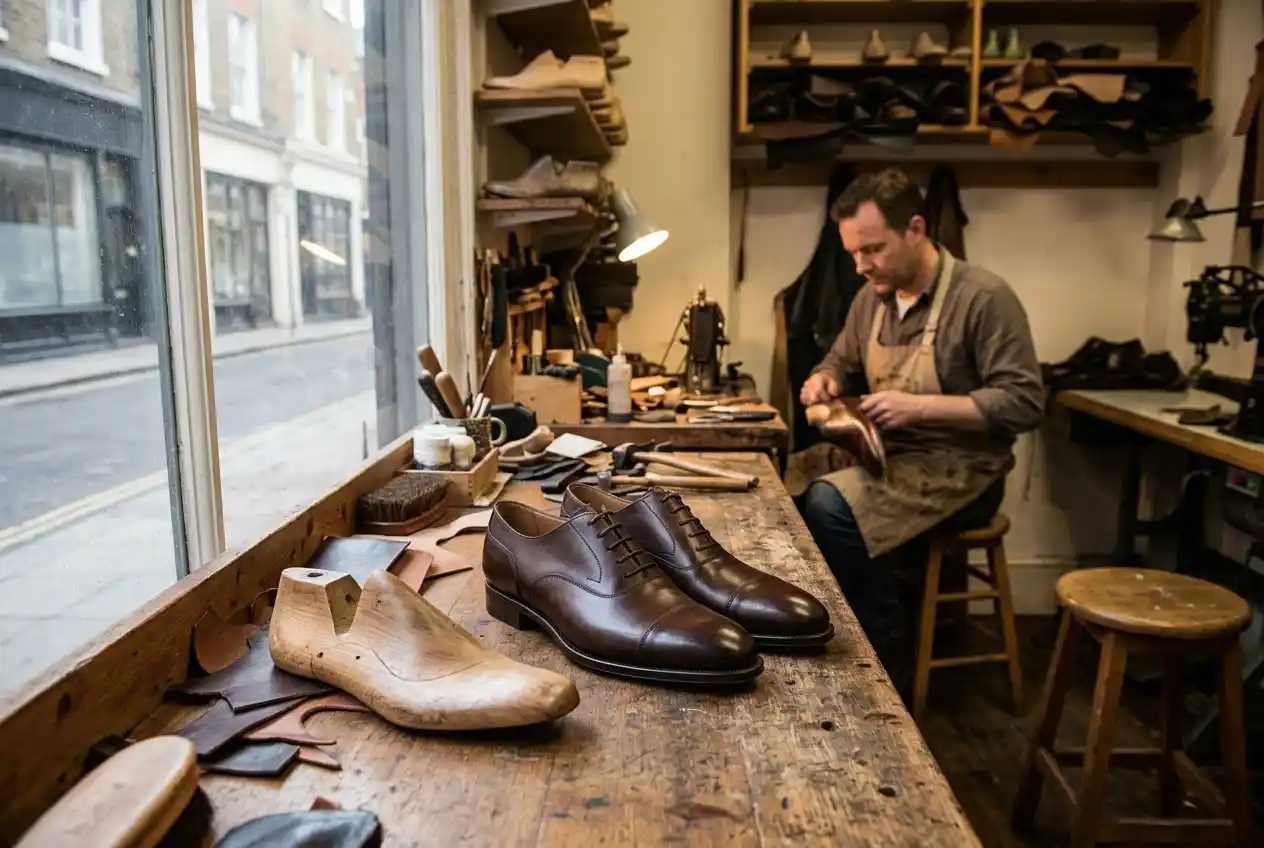
Then comes the detail that explains the whole district. John Carnera, the master lastmaker who spent his working life at Cleverley, is the father of Dario Carnera, the Huntsman cutter five minutes’ walk back up the road. Father shapes the last, son drafts the pattern. The suit and the shoes that finish it come not just from the same neighbourhood but, in this case, from the same family. It’s the clearest possible answer to the question of what dressing well in this corner of London actually means. Not one spectacular garment, but a set of related crafts standing close enough together to share a surname.
Two O’clock: a Fitting
Back on the Row, the afternoon belongs to fittings, whose choreography follows a familiar sequence. What comes out of the workroom isn’t yet a jacket. It’s an argument in progress: cloth held together with lines of white tacking stitches, canvas showing at the edges, one sleeve hanging a little uncertainly. The client puts it on and something in the room changes register. This is the part of bespoke tailoring that no photograph gets right, because nothing about it is finished and everything about it is being decided.
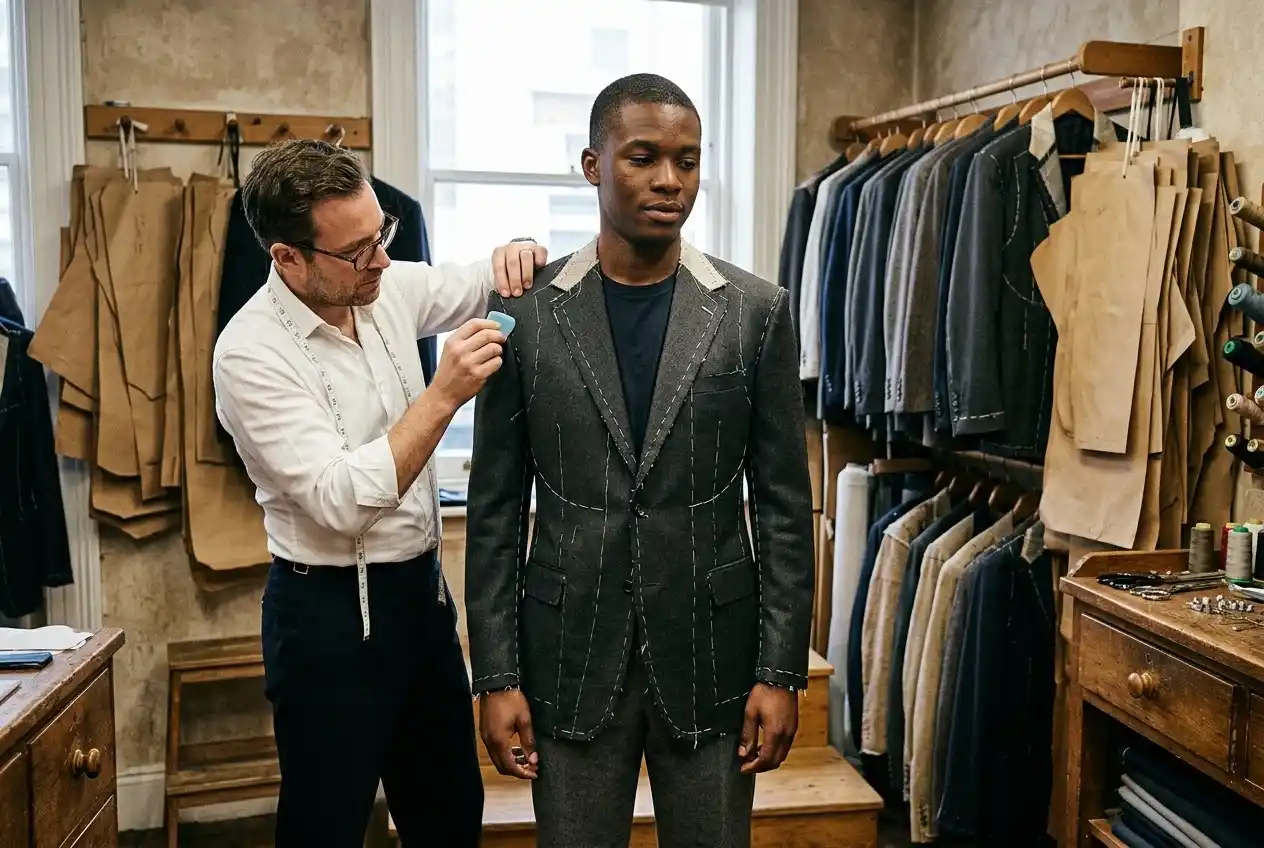
The client stands square to the mirror. The cutter settles the shoulders with both hands, then steps back and looks for a long moment, head tilted, saying nothing. Then the chalk starts. A short stroke where the collar lifts off the shirt. A line down the centre back where the cloth wants taking in. A mark at the hip. Pins go into the sleeve to change its pitch, the angle at which it hangs against the arm’s natural swing. The client is asked to sit, and the cutter watches what the skirt of the jacket and the knee of the trouser decide to do about it.
Related Article · LifestyleFive Menswear Shops Worth Staying ForFive independent menswear shops where tailoring, coffee and conversation turn buying clothes into an experience that rewards time, attention and craftsmanship.→The talk is not small talk. It’s working information. Whether he drives to the office or walks. What he actually carries in his pockets, as opposed to what he claims to. Whether the jacket will spend its winters over knitwear. One shoulder sits lower than the other, as one shoulder nearly always does, and the cloth will be quietly rebalanced to disguise it. None of this is mystical. Half of a fitting is making a garment agree with a body. The other half is understanding the life the garment is about to lead and that half is the part no machine has managed yet.
The Wider Wardrobe
The district doesn’t stop at the Row’s kerb. It leaks into the surrounding streets and changes register as it goes. On Old Burlington Street, at number 32, Anderson & Sheppard practise the other great school of London tailoring: the soft, draped cut, generous through the chest, closer in spirit to a cardigan than to armour. The firm set up on Savile Row in 1906 and in 2005 moved the 176 yards to its current shop, where a wall of customer patterns hangs in view and the floor is arranged so you can see into the cutting room. That tells you where the house believes its heart is. Around the corner at 17 Clifford Street, its haberdashery has sold the off-duty side of the same wardrobe since 2012: trousers, knitwear, the clothes for the days between fittings.
Back on the Row itself, at number 9, Drake’s makes the case that the street still recruits. Founded in 1977 as makers of scarves and then handmade ties, the firm has grown into a full menswear house, and the flagship it opened here in 2019 sells soft-shouldered tailoring, knitwear and shirts to a crowd noticeably younger than the district’s reputation, with art on the walls and none of the hush. London menswear keeps producing new institutions. Some of them simply choose the old address.
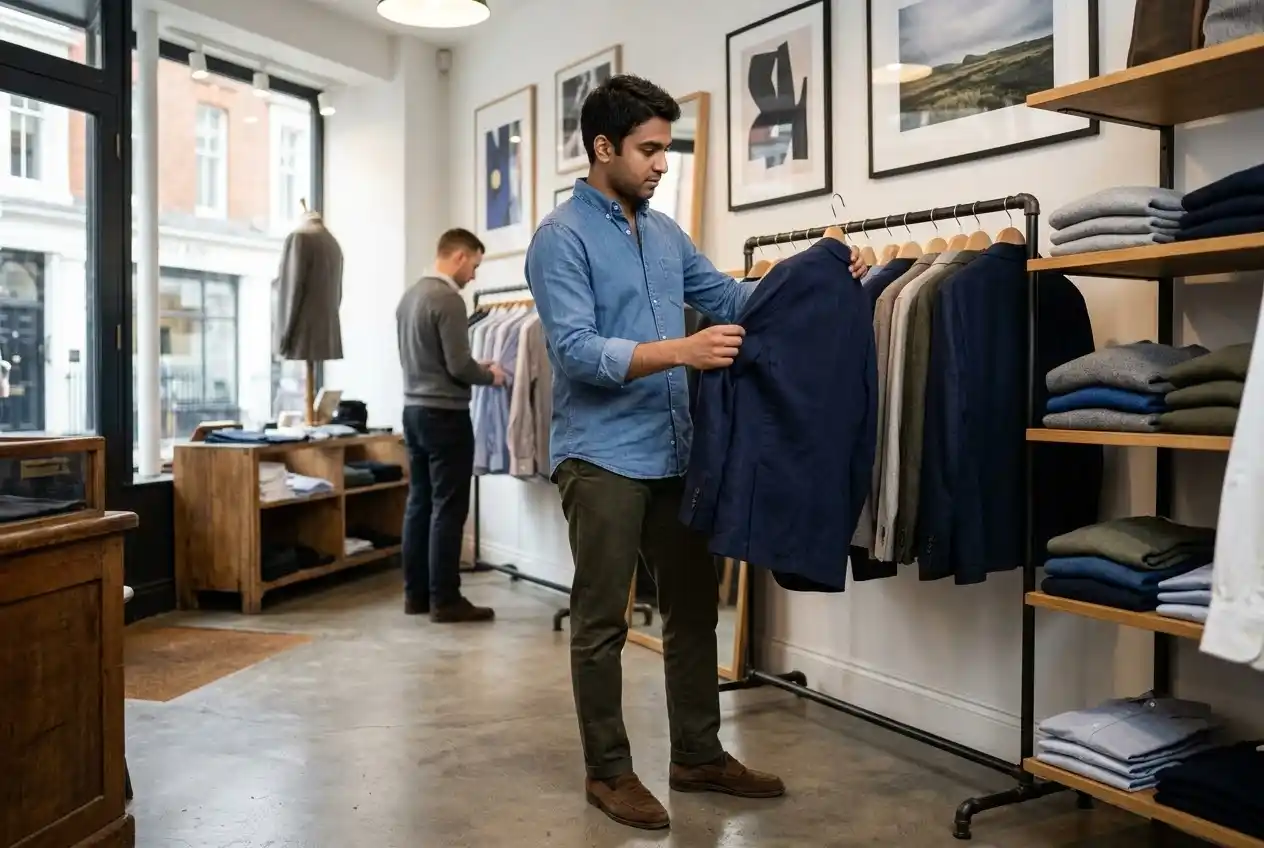
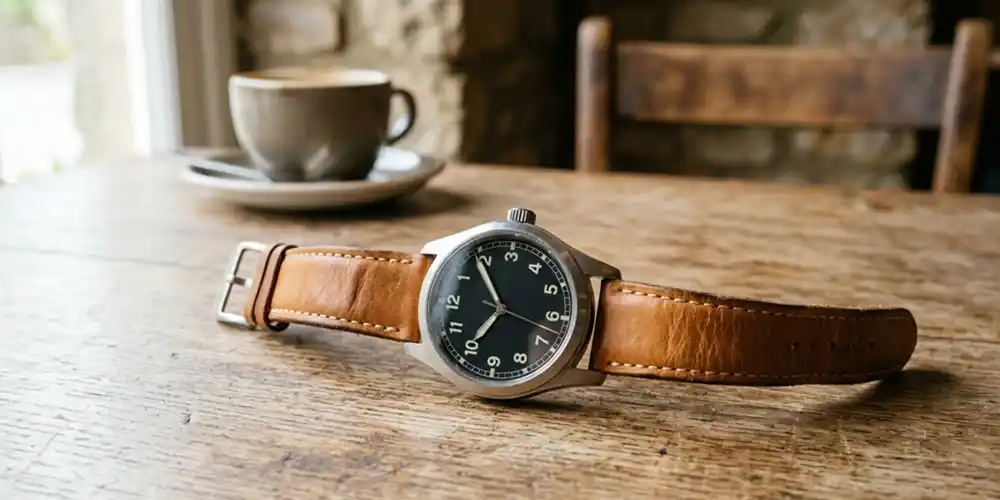
And south again, linking Burlington Gardens to Piccadilly, the Burlington Arcade has been trading since 1819 under the eye of its beadles, the arcade’s own uniformed guards. Between the cashmere and the jewellers sit the vintage watch dealers, and together the arcade’s old things supply the district’s counter-argument. Bespoke is the systematic removal of chance: every measurement taken, every seam decided in advance. Vintage runs the other way. The past has already made the piece, chosen its size and worn in its edges, and your only move is to be the person it happens to fit. A wardrobe holding both is usually more interesting than a wardrobe holding either.
Where the District Talks
For most of its history, Savile Row had nowhere to sit down. That changed in 2020, when The Service opened at number 32, an initiative involving James Sleater of Cad & The Dandy and the Pollen Estate, which owns the street’s freehold. The coffee has since migrated south towards St James’s, but the admission stood: the street needed somewhere to talk that was not a fitting room.
The older answer has been waiting on Mill Street all along. The Windmill is a Victorian pub two minutes from the top of the Row, with cask ales on the pumps, a roof terrace and pies that have won national awards more than once. Its regulars have long included the tailors of Savile Row and the art dealers from the galleries nearby, and at the end of a weekday you can watch the district clock off into it, jackets over arms, top buttons finally undone.
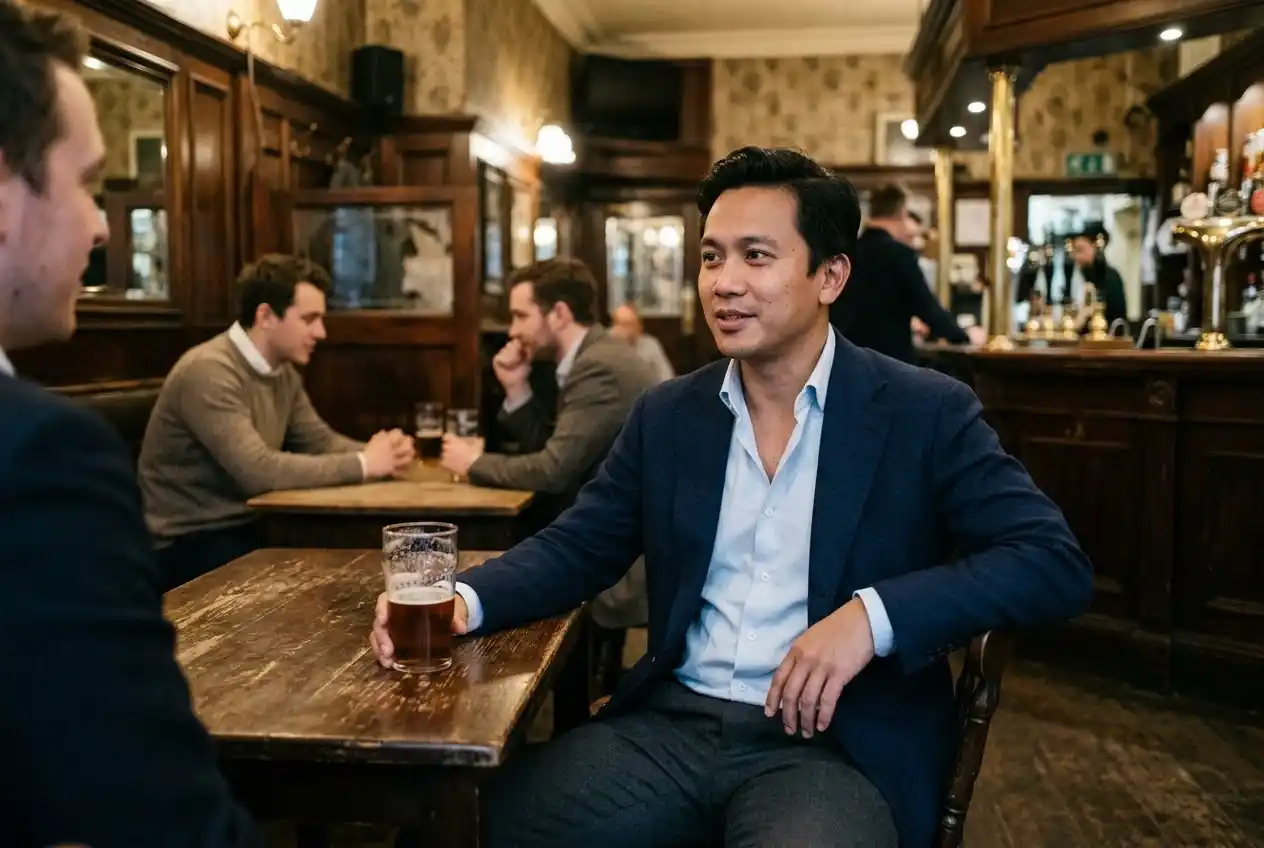
The conversations travelling over the bar are the neighbourhood’s real trade press. A cloth delivery running late out of Yorkshire. A wedding order that has somehow become three wedding orders. Football, obviously. Rents, always. Which house is taking on an apprentice and which cutter is threatening, for the fourth consecutive year, to retire. Nobody in here says the word heritage. They talk about work, because work is what the district actually runs on, and then someone checks his watch, drains his glass and goes back to press a shoulder before the shop shuts.
Last Light
Walk back down the Row as the shops close and the street performs its quietest trick. The basement lights go off one workroom at a time. Behind the hoardings at number 27, the former West End Central police station is being redeveloped, with Westminster granting consent in 2024 for a scheme that includes a new home for the London Academy of Bespoke. The street that has always trained its own is building itself a classroom.
Related Article · LifestyleJackets with a StoryAcross continents, worn jackets reveal a quieter truth about modern life: the garments men value most are often the ones marked by time.→Through the last lit lightwell, this: a half-made coat on a stand, one sleeve tacked in, chalk marks still legible across the back. Somebody will pick it up at half past eight tomorrow morning, exactly where it was left. The windows are what the world photographs. The unfinished coat under the pavement is what the place actually is: a neighbourhood, mid-stitch.
“Savile Row doesn’t really sell suits. It sells proximity: generations of tradespeople correcting each other’s work within walking distance, an intimacy that scale and speed have made almost impossible to inherit elsewhere.”